Costantino Beltrami Museum
Details
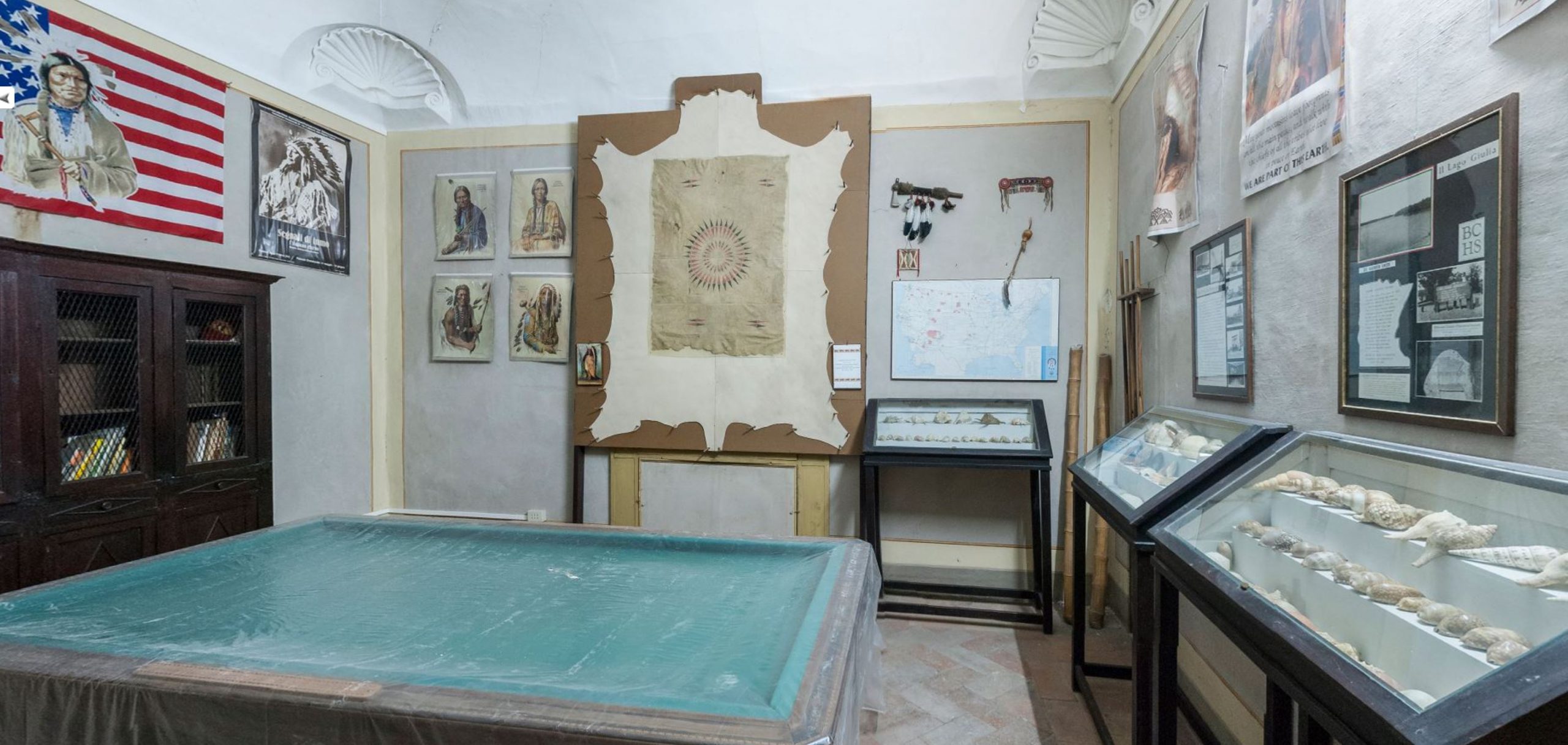
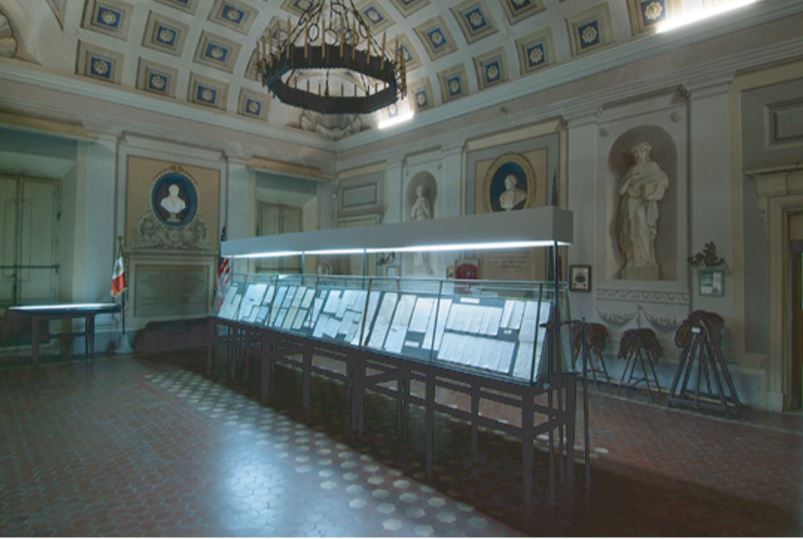
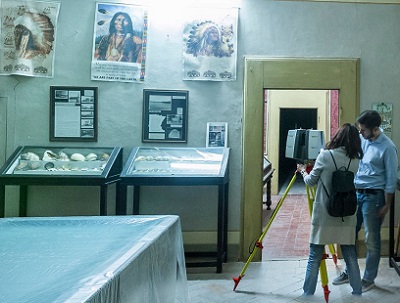
The Giacomo Costantino Beltrami collection is located on the first floor of the Beltrami-Luchetti Palace, where visitors can admire objects and artifacts from the peoples of North and Central America. The items were collected by Beltrami during his travels across the American continent, which led him to discover the sources of the Mississippi River. In the main exhibition hall, many artifacts of indigenous populations are displayed in glass cases.
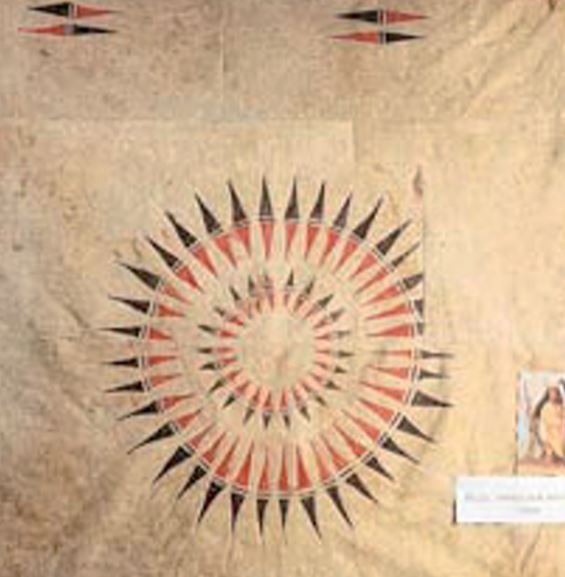
From objects of the Great Plains tribes—painted hides, bows and arrows, calumets, dagger sheaths, belts with rattles, bags, and horn tools—visitors can move on to Aztec and Mexican terracottas, carved coconuts, stone axes, worked shells, and painted gourds from Mesoamerica and Haiti.
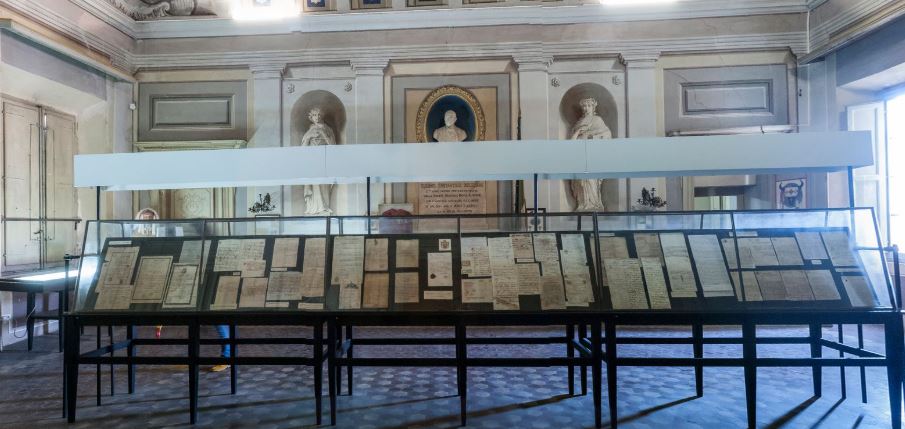
In rooms adjacent to the main hall are displayed a Mexican herbarium, a malacological collection, minerals and stones from Mexican mines, weapons and personal items, and Beltrami’s unpublished manuscript in Italy of his book Le Mexique, which contains a detailed account of his travels in that country.
The collection consists of objects and artifacts from the peoples of North and Central America, highlighting indigenous craftsmanship. From Great Plains tribes’ objects—painted hides, bows and arrows, calumets, dagger sheaths, rattled belts—to Aztec and Mexican terracottas, carved coconuts, stone axes, worked shells, and painted gourds from Mesoamerica and Haiti, as well as a Mexican herbarium, a malacological collection, and minerals and stones from Mexican mines.
Gallery
Multimedia Archive
(Filottrano, August 9, 1889 – Filottrano, November 19, 1969) was an Italian architect.
In 1905, he obtained a license from the equivalent Technical School in Cingoli, and in 1907 and 1908, he was awarded the silver medal and first-grade diploma by the Institute of Fine Arts of the Marche in Urbino for the academic years 1906/1907 and 1907/1908. In 1909, the Ministry of Public Education certified him to teach drawing in technical and normal schools and appointed him assistant at the Drawing School of the Royal University of Cagliari. In the same year, he was assigned as an assistant engineer to the Technical Office of the Municipality of Rome. In 1910, he was among the three winners of the competition for a municipal designer in Biella. In 1911, he was appointed third-class assistant at the Technical Office of the Municipality of Rome and, in the same year, he founded the Manifattura Picena, a factory for artistic ceramics in Rome, at San Salvatore in Lauro.
In 1914, he was a drawing assistant at the Technical Institute in Rome and obtained the license for the special course in architecture and the diploma of Professor of Architectural Drawing with top marks from the Royal Higher Institute of Fine Arts of the Marche in Urbino. in 1915, he passed five supplementary exams for the architecture course at the Royal Higher Institute of Fine Arts in Rome. During his life, he was promoted by the Rome City Council to second-class assistant by merit (1917) and participated in numerous competitions for war memorial monuments (1921). In 1923, he left public service to dedicate himself to freelance professional work. He was appointed Knight of the Order of the Crown of Italy and Knight of the Equestrian Order of Saint Agatha (1925). In 1927, he began artistic consultancy at the Maggini furniture factory in Recanati. The following year, he was registered in the professional register of engineers and architects by the Royal Court of Rome. Furthermore, he was appointed Commander of the Order of the Crown of Italy (1934), Commander of the Equestrian Order of Saint Agatha (1935), President of the Autonomous Institute for Public Housing in Ancona (1938), Grand Officer of the Equestrian Order of Saint Agatha (1939), and Knight of the Order of Saints Maurice and Lazarus (1942). The Minister of Grace and Justice appointed him a member of the Commission for the reform studies of professional regulations for architects in Rome and a member of the National Council of Architects, also in Rome (1951). In 1958, the Minister of Public Education awarded him the silver medal for benefactors of school, culture, and art.
Deeply connected to his native Marche region, he designed notable works in his homeland, including the Ascoli palace in Ancona (currently home to the Consulate of the Republic of San Marino), arranged the Palace of Justice in Urbino, and oversaw the reconstruction of the Town Hall in Fossombrone (a national monument), not to mention the numerous restorations of other important national monuments. He is responsible for the Ester Gigli retirement home in Recanati, the civil hospitals of Filottrano and Sassoferrato, as well as the plans for the transformation of the hospitals in Fabriano and Urbino and the schools in Cingoli and Fossombrone. He designed villas for Senator Pitocco in Rome, the villa for the Sonnino family in Ancona, the churches of Casine di Paterno and Montoro di Filottrano, monumental tombs in the cemeteries of Rome, Forlì, Filottrano, Fossombrone, and San Marino, as well as honorary monuments for war dead, including the one for French soldiers killed in Italy and the large crooked lighthouse in America for the missing of the Lusitania. He carried out significant works at the shipyards of Ancona, Riva Trigoso, Rivarolo, and Palermo, as well as works for the Mira Lanza factories and for Italian sugar refineries. His restoration work for the layout of Piazza del Quirinale, Piazza del Popolo, Palazzo Firenze (headquarters of the "Dante Alighieri" society), Piazza del Cinquecento, and Castro Pretorio in Rome were also noteworthy. His most important activity occurred when, chosen among architects along with the Frenchman Hebrand, he was called upon by the renowned American Hendrik Andersen to plan the creation of a large city that was intended to rise in America after the First World War as a world center for peace. Andersen's passing prevented the realization of the impressive undertaking, and Luchetti Gentiloni's projects partly ended up in America and were partly donated to the Italian state. In the regional field, he was an honorary inspector of monuments in Ancona and president of the Commission for Natural Beauty, a member of the Accolta dei Trenta, a member of the Marche Institute of Sciences, Letters, and Arts, and an academic of the "Catenati" of Macerata. Nationally, he was a member of the National Council of Architects and the governmental Commission for the study of professional laws.
On the fiftieth anniversary of his professional activity (December 1958), the President of the Italian Republic conferred upon him the silver medal as a benefactor of School, Culture, and Art. In the Republic of San Marino, in the first decade of the 1900s, he established a small factory for valuable ceramics in the Fondi area, some of which are now preserved in the San Marino government museum. He was the author of notable works in San Marino, including the renovations at the church and art gallery of the Convent of San Francesco, the Basilica del Santo, the Government Congress Palace, the marble commemoration for Pope John XXIII in the Church of San Pietro, and, the last chronologically but certainly not least in importance, the monument to the great architect Bramante delle Penne of San Marino. He dedicated the last decade of his life here, working with lively industriousness and great artistic capability, and for his activity abroad, he was awarded the Gold Medal of Merit of the Italian Republic. The Sammarinese government also awarded him the title of Grand Officer of the Equestrian Order of San Marino. By descent, he also held the title of Sammarinese Patrician due to the aggregation of his family to the patriciate since 1789.
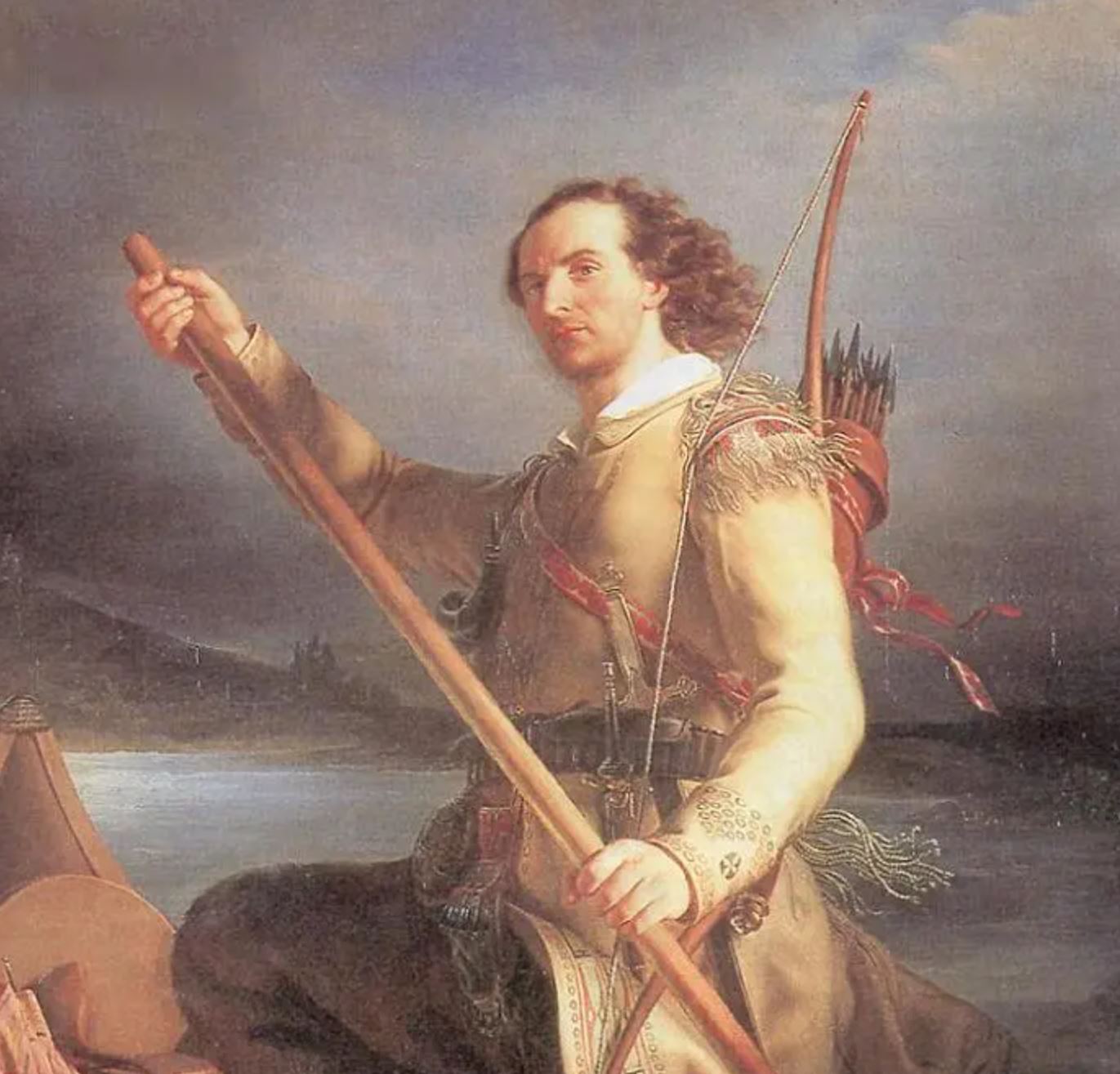
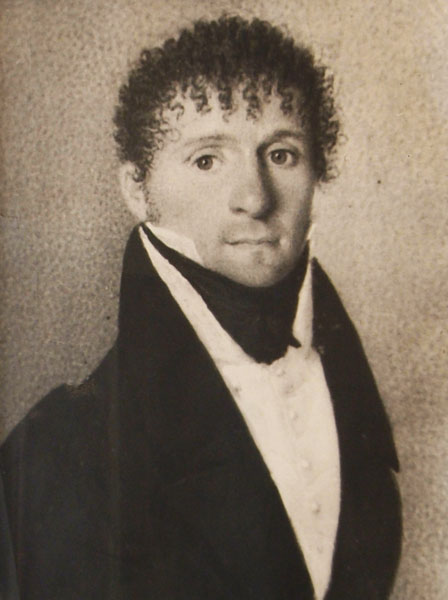
A disillusioned Bergamasque patriot, a restless explorer, capable of venturing out alone, almost two centuries ago, into an area of the Mississippi River territory of the Indians, with courage, fortitude, and a red umbrella as a bizarre pass. And of reaching his goal: arriving at one of the sources of the great river.
A compelling story, that of Giacomo Costantino Beltrami (1779-1855), after whom the homonymous county in Minnesota is named. And according to some, he inspired James Fenimore Cooper for his adventure classic, The Last of the Mohicans.
Above all, Beltrami deserves credit for compiling an extraordinary collection of invaluable Indian artifacts, which are still preserved today. [Here is a gallery of images (photos by Daniela Rota).
A Napoleonic magistrate, disheartened by the climate of the Restoration and having escaped hanging on charges of conspiracy against the Papal States, Beltrami decided to become an impromptu explorer in the New World, ascending the Mississippi in a still-wild area, driven by existential torments.
Hundreds of miles in eleven months, almost immediately abandoned in a labyrinth of swamps by guides and an interpreter. He was even robbed of his flintlock, which prevented him from lighting fires to dry off and warm up in the evening.
Forced to drag his canoe immersed in waist-high water, alone, with a rifle, a sword, and a bizarre red umbrella, which became his symbol and functioned as an eccentric pass with the Indians, who evidently considered him protected by the gods for undertaking such a crazy adventure. On August 31, 1823, in the county that now bears his name in Minnesota, Beltrami reached one of the river's sources, naming it after Giulia, a lost and never-forgotten friend.
The first white man to reach that spot, "His true achievement is having traveled that unexplored territory with an exceptionally modern sensibility: recording first-hand testimonies on the degradation that contact with white people was causing among the Indians, particularly with alcoholism. But above all, repeatedly collecting and sending to Italy weapons, tools, clothing, and decorations," says Cesare Marino, an anthropologist at the Smithsonian Institution, who reconstructed his story. And who, in September 2013, curated an exceptional visit by Italiani di Frontiera to that collection in Bergamo, which is now considered a treasure even by ethnographers from overseas.
A delayed vindication for Beltrami, whose endeavor was instead despised by his contemporary American scholars, perhaps not without xenophobic prejudices against that romantic explorer so far removed from intellectual circles.
The extraordinary objects collected by Beltrami are currently divided between the collection housed at the Ettore Caffi Museum of Natural Sciences in Bergamo, and the collection passionately created by the late Count Glauco Luchetti Gentiloni (photo below), now curated by his daughter Marzia, at the Beltrami Museum in Filottrano (Ancona), a town in the Marche hills, where Beltrami died.