Glauco Luchetti Gentiloni himself designed the new Contesa in 1979, entrusting the realization of the first event, held on August 10, 1980, to the creativity of a small group of motivated organizers gathered under the name “Società dello Stivale.”
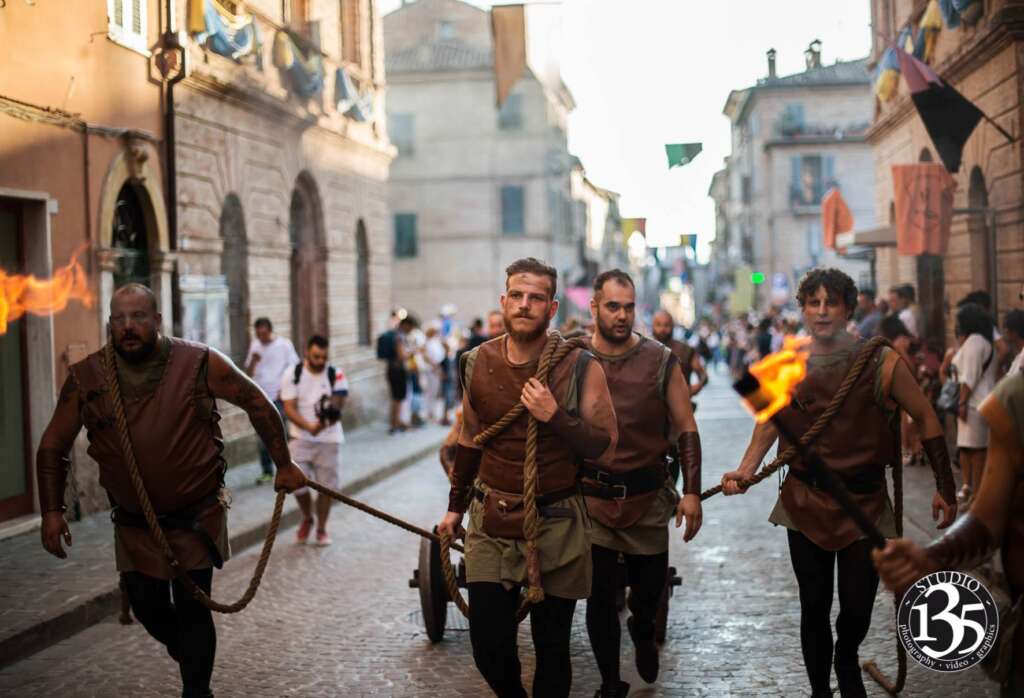
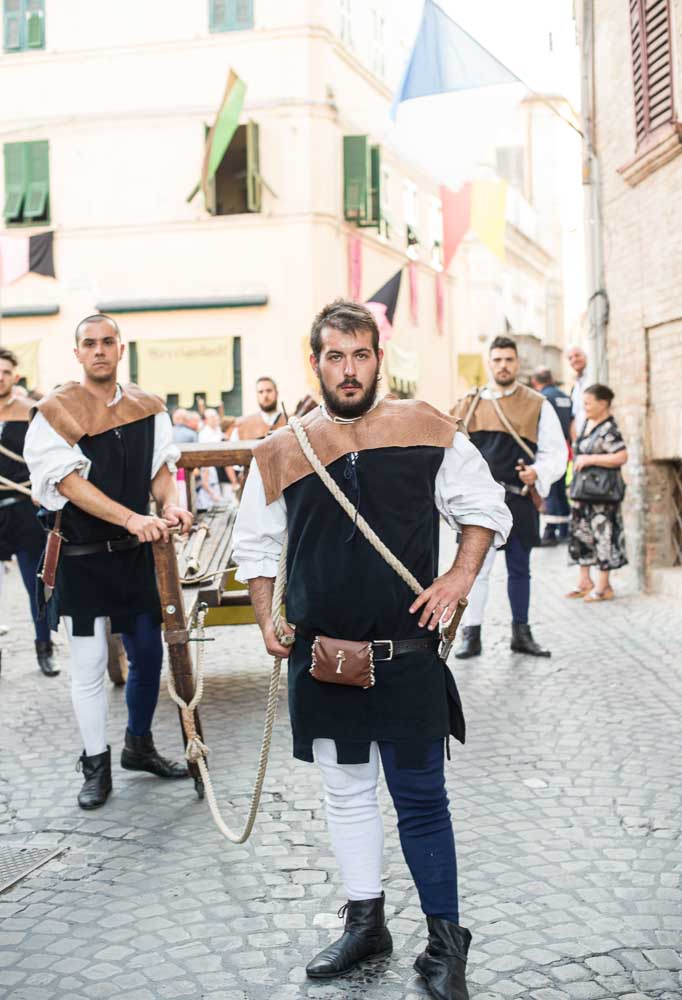
On the festival day, a procession formed by the costume groups of the districts will parade through the town streets, pulling the cart with the straw effigy to the town square. In the evening, the event will take place in the presence of the local citizens, authorities, and invited representatives from Osimo.
Uniqueness
Leisure
Cultural Event
Social Event
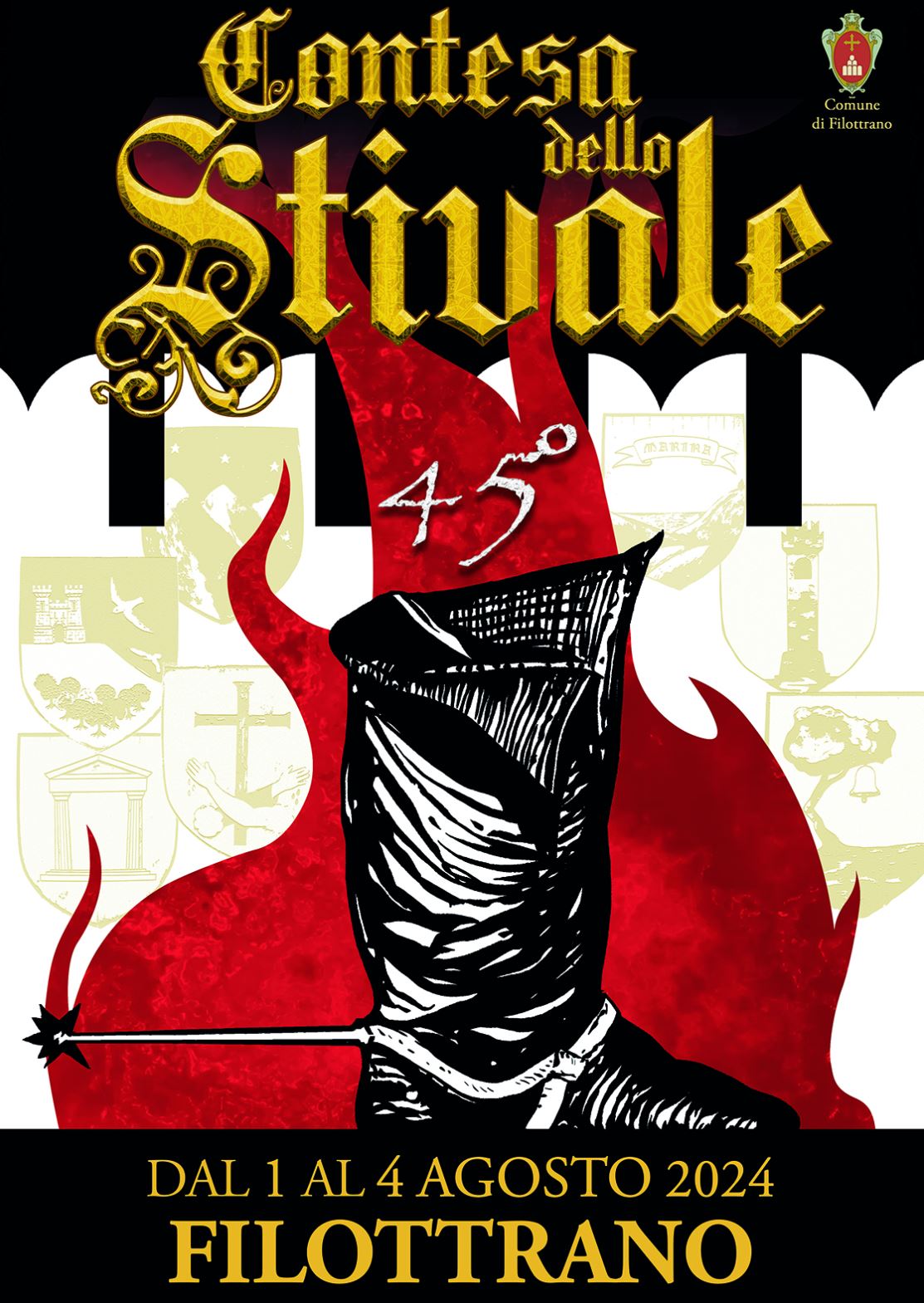
Contest of the Boot
Amidst ancient walls, torches, drums, and banners, five districts challenge each other to conquer the Boot (Stivale), a symbol of honor and supremacy.
stivale03 -
Details
Thursday, 01/08/2024
Sunday, 04/08/2024
The taverns open every evening at 6:00 PM
Free Entry: The event is open to the public with free admission; therefore, anyone can attend the medieval games, the historical parade, and the shows.
Information: For more details on the program, it is advisable to visit the official Contesa dello Stivale website or its Facebook page.
The Society of the Boot
The Contesa dello Stivale is a historical reenactment held annually. This picturesque and evocative event celebrates an ancient local legend and evokes a medieval atmosphere with parades, challenges between districts, period costumes, and shows.
Origin of the Name
The name “Contesa dello Stivale” (Contest of the Boot) derives from a chivalric contest in which the district contenders challenge each other to conquer a boot, a symbol of victory and prestige. According to legend, during a battle between the troops of Filottrano and those of an enemy commander, a boot was seized as a trophy. The tradition of the contest was born from this event.
Main Elements of the Event
- Historical parade with hundreds of participants in medieval attire.
- The Giostra dello Stivale (Joust of the Boot), a competition between the district knights.
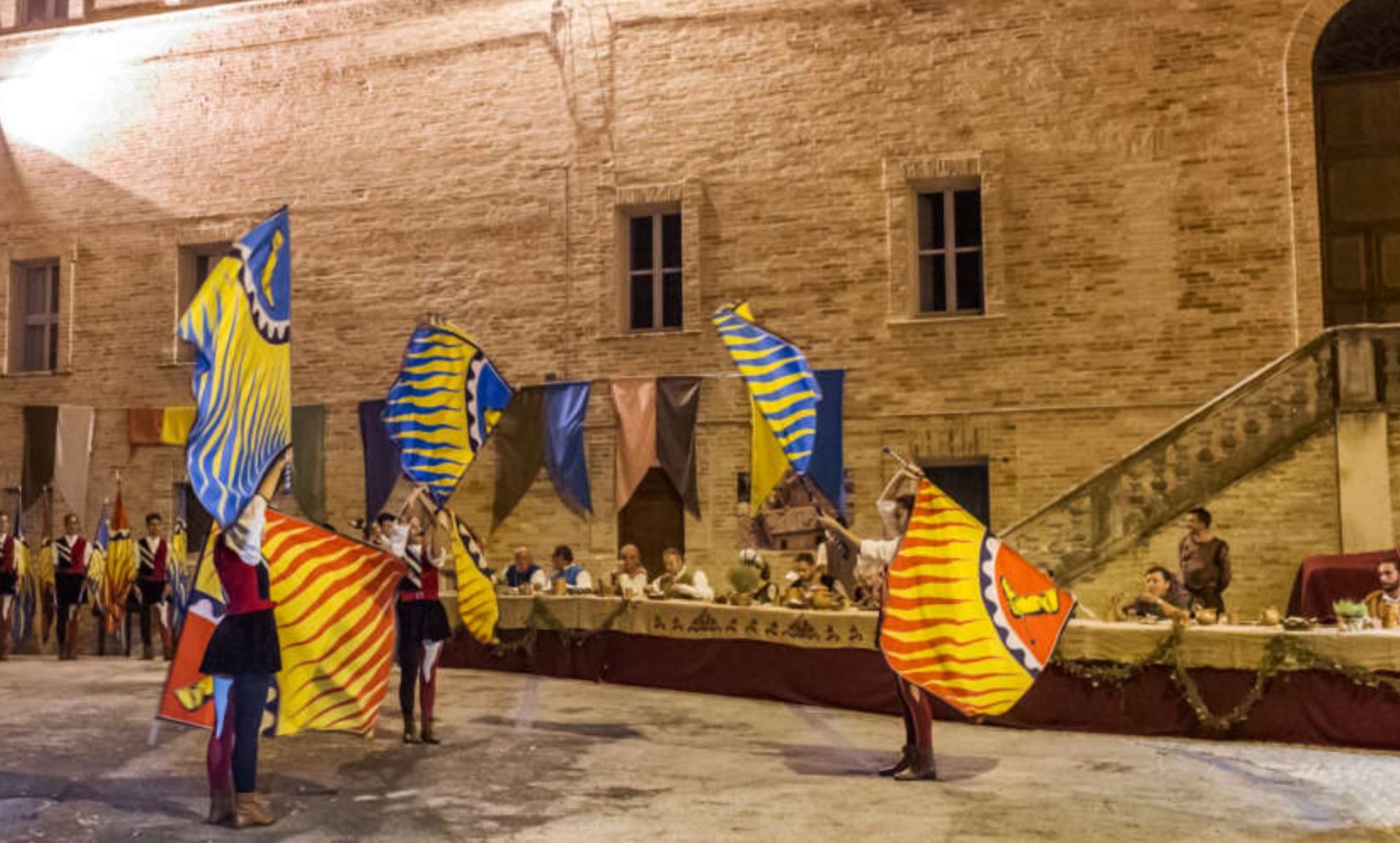
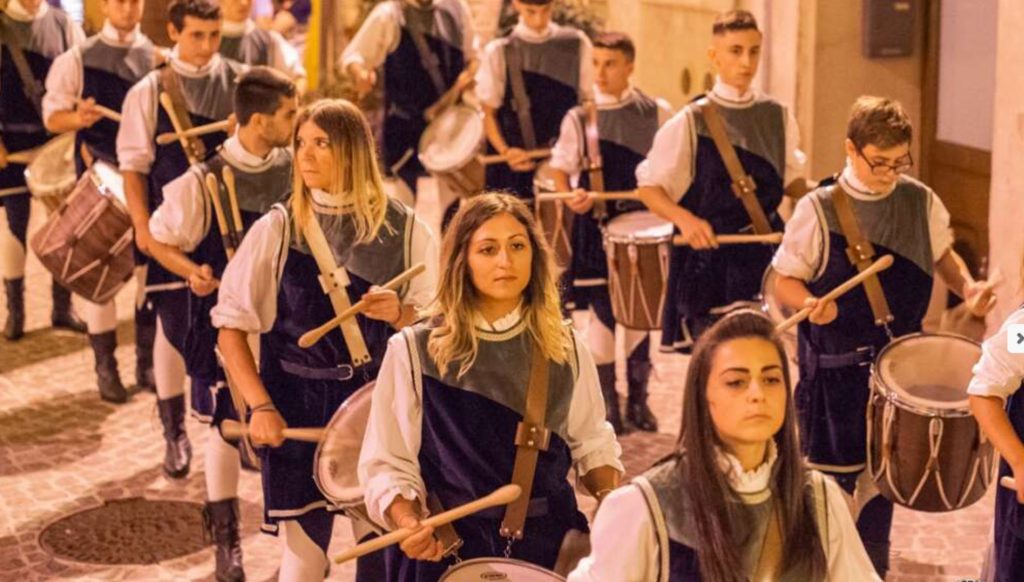
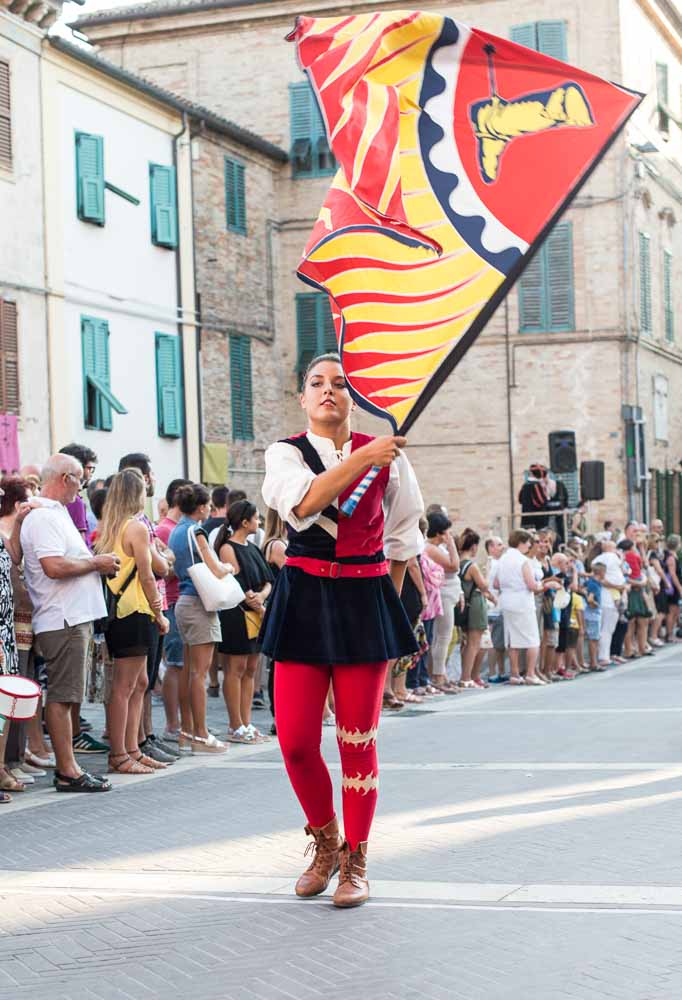
- Flag-wavers (Sbandieratori), drummers, and theatrical performances.
- Medieval markets and gastronomic stands with local products.
The Districts (Contrade)
Filottrano is divided into seven districts that challenge each other to conquer the Boot:
- Marina
- Monti
- Montoro
- Storaco
- Torre
- S. Biagio
- Stimmate
When continuous border clashes disrupted relations between Filottrano and Osimo, during a punitive expedition in which the Osimo forces captured horses and oxen and took many prisoners, the people of Filottrano managed to capture an enemy soldier. While fleeing, he left behind the boot for which he had been held captive. The boot thus became a symbol of revenge against the Osimo people. Every year, the local youth paraded a straw effigy wearing the historic boot through the streets of the town, which was then burned amid jests and mockery. The tradition was suspended after a few years, until in 1979 the “Società dello Stivale” decided to organize the first historical reenactment of the Contesa.
The Idea of Glauco Luchetti Gentiloni
The motivations behind the reenactment (in the reform document of November 24, 1468, it is written that “the men of Montefilottrano have decided to live in peace”) gradually lost their initial strength and faded in the collective memory of Filottrano, which had grown indifferent toward the “contesa.”
But blood is not water. The blue blood running through the veins of Engineer Count Glauco Luchetti Gentiloni reignited the passion for a historical reenactment in which—true or not—his ancestors were involved: the descendants of Metonius, from whom the “Gentiloni” of Filottrano originated.
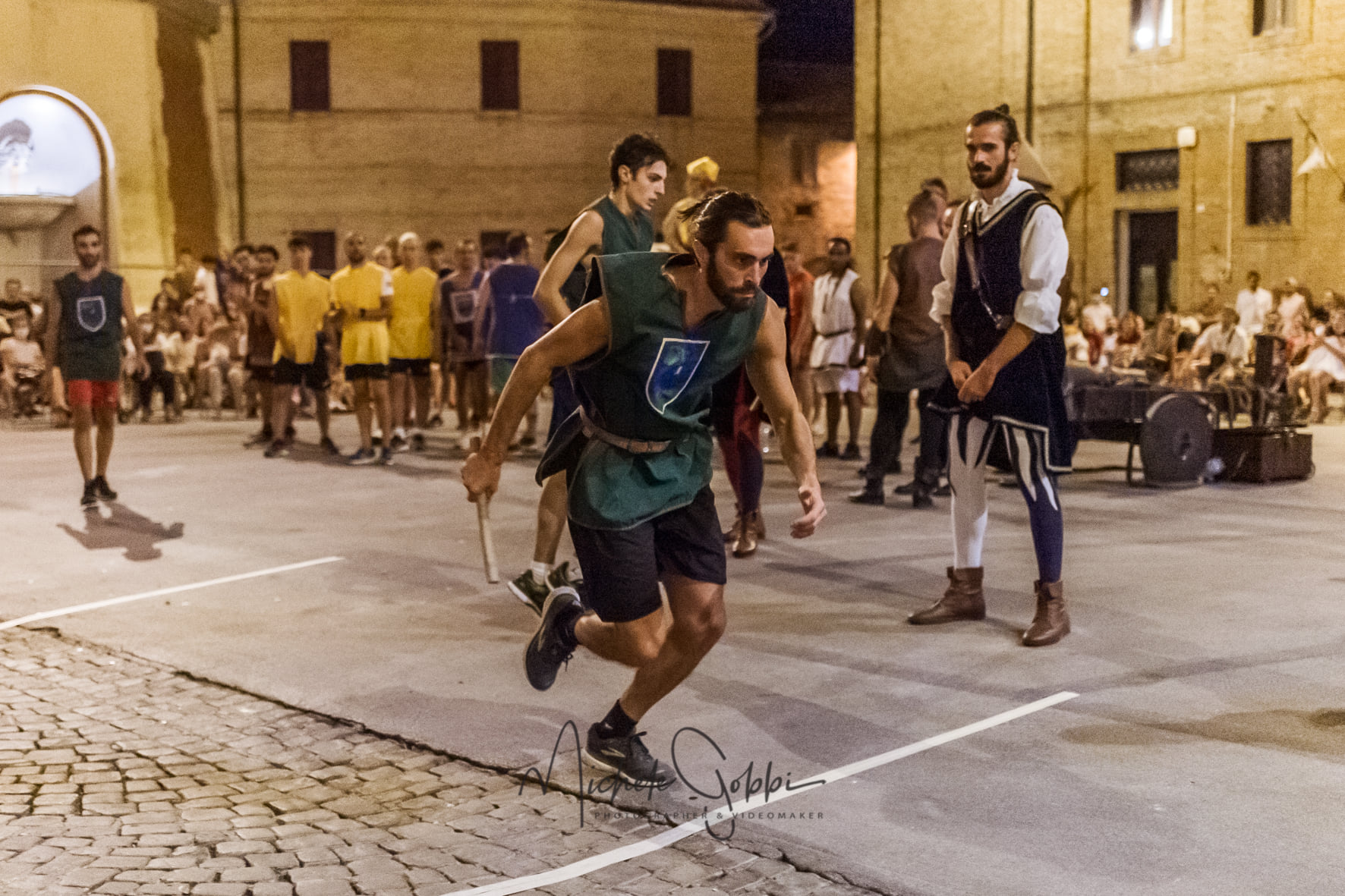
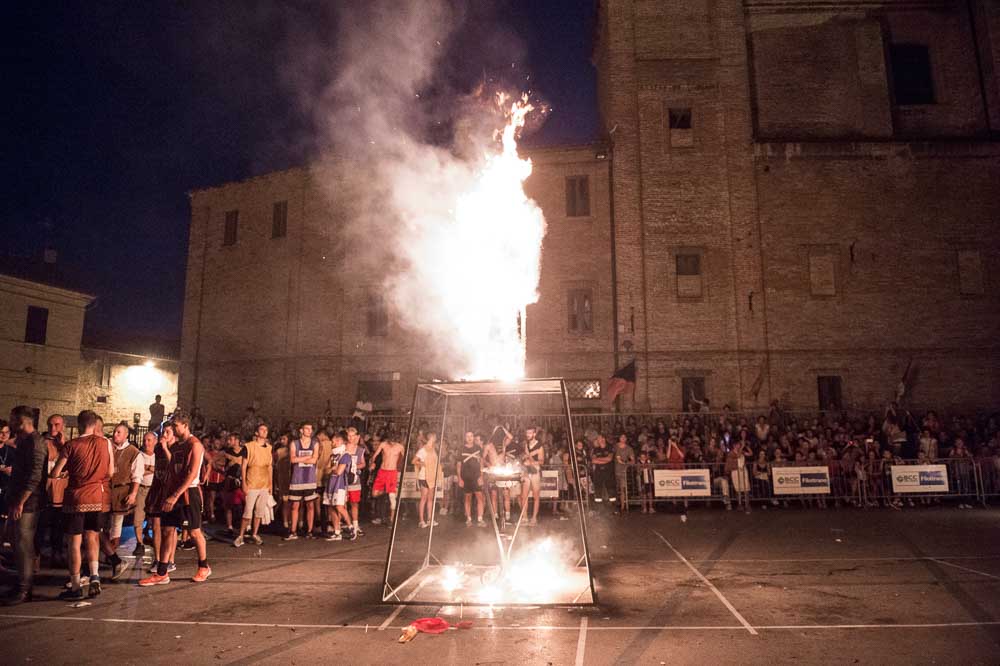
The seven districts compete in a relay race for the privilege of setting the effigy on fire with a torch passed between the athletes during the race. After the burning, which removes any trace of animosity, the representative of Filottrano reads a message of friendship from the November 24, 1468 reform to the representative of Osimo. This is followed by a communal toast and the awarding of the Bronze Boot to the winning district.
Luchetti Gentiloni’s project includes a series of plans indicating:
- The route of the procession and the relay;
- Details of the effigy and the cart;
- Sketches of the poster and the parchment.
The study, which the author dedicates “for Filottrano – always,” is completed with the rules of the contesa, the description of the districts, and the instructions, routes, procedures, and timing of the historical procession.
The Procession
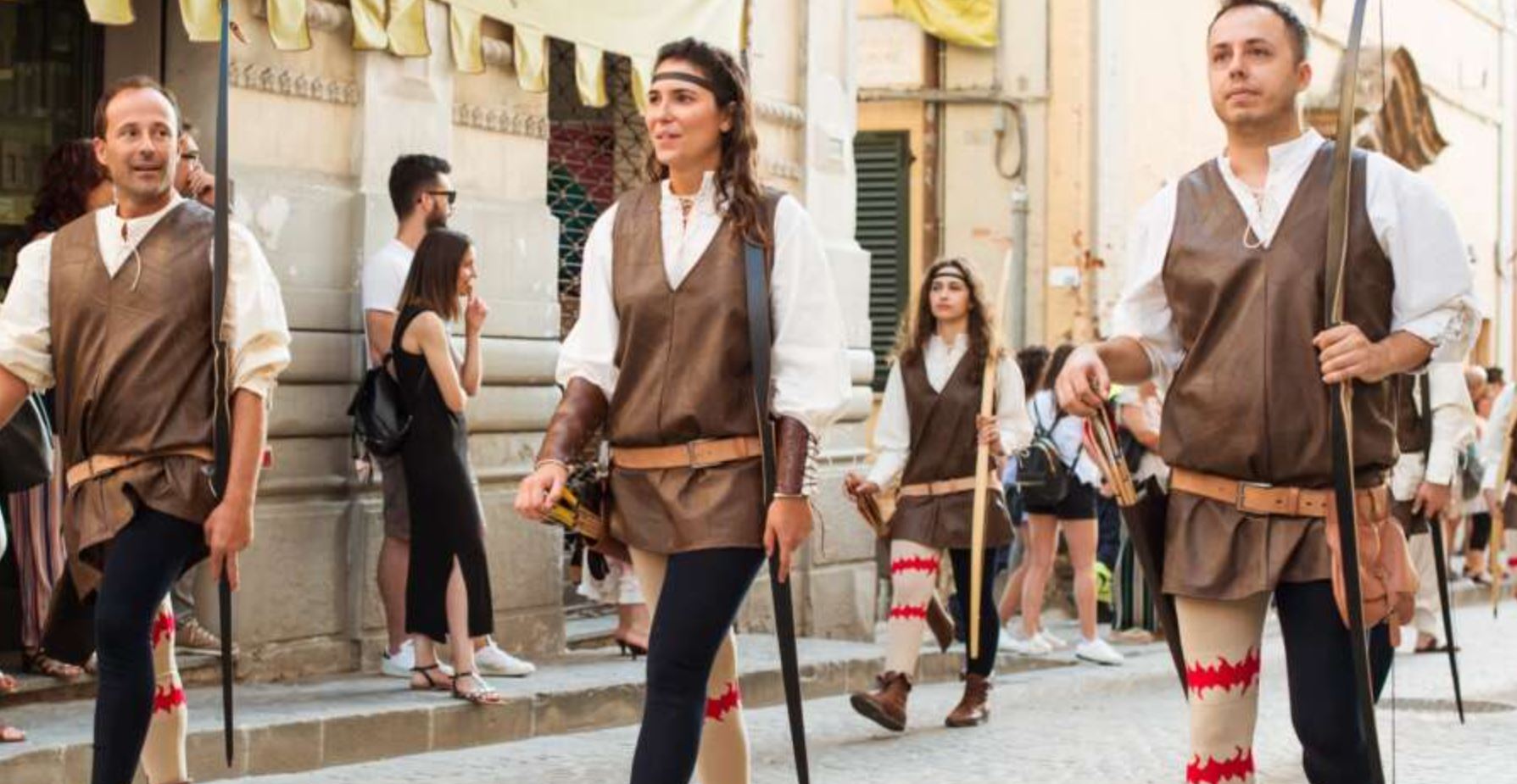
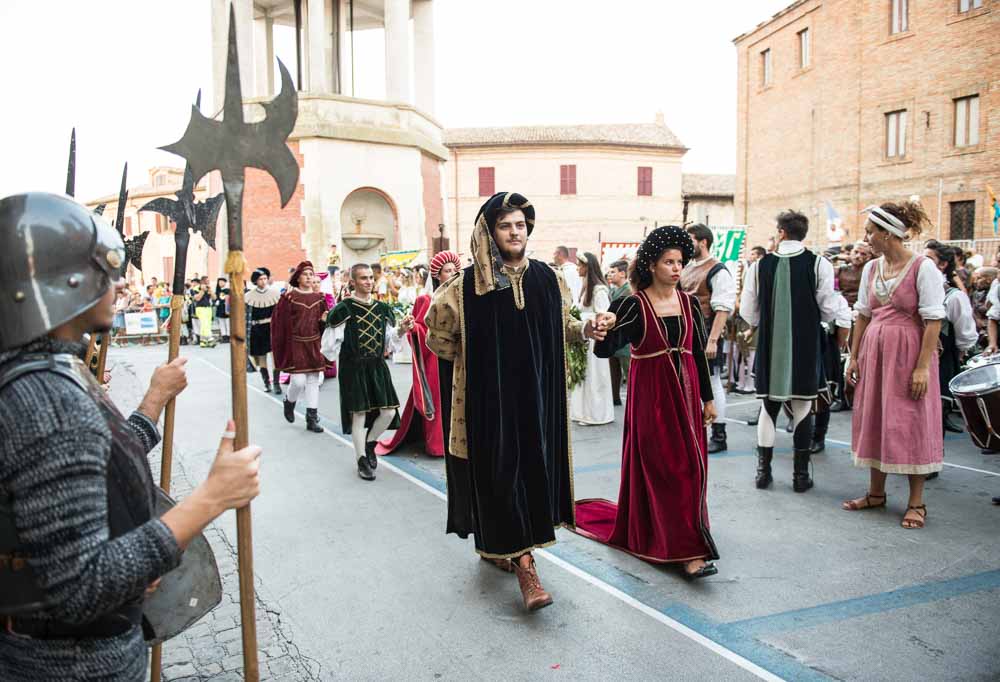
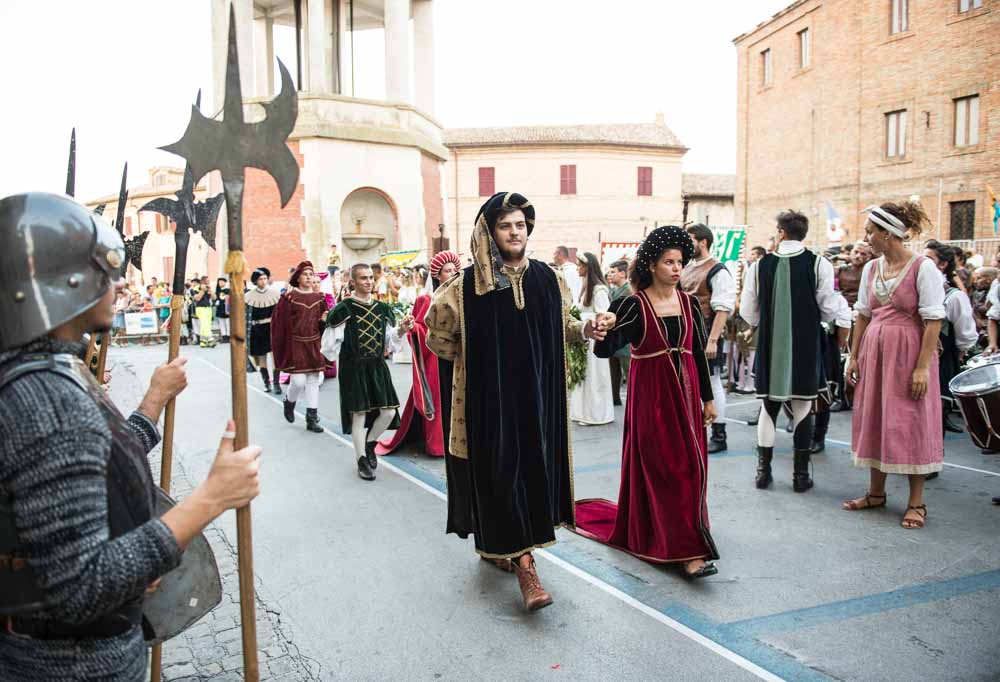
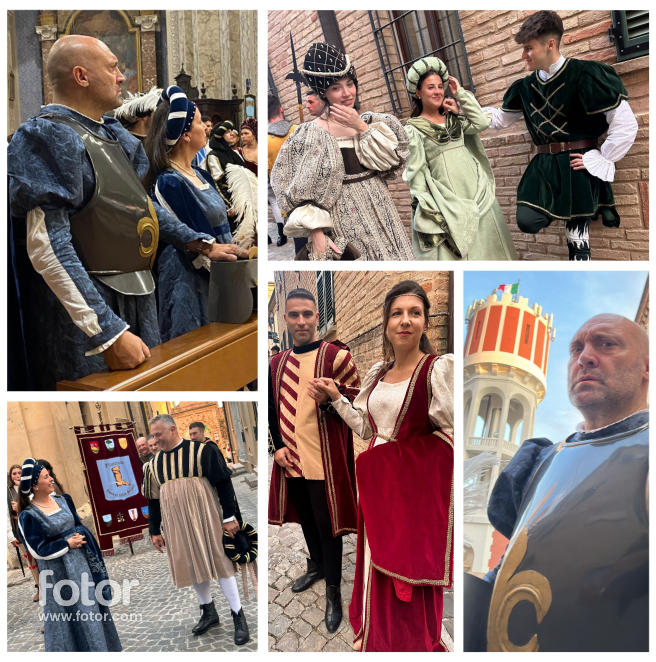
Ladies and knights, villagers and nobles, maidens and pages, soldiers and dignitaries owe much to Tina Tittarelli’s costumes, which allow them, on a summer afternoon, to escape everyday life and feel like actors on an almost cinematic set, rediscovered with each edition.
The awareness that the pride displayed in every contesa is not mere pose but authentic—rooted in a distinguished past of deaths and resurrections—is the main reason why participants continue to amaze spectators who watch from the castle.
The gonfalon and Osimo banners, along with their guards, are part of the historical procession, supervised by halberdiers and gunners who precede them, and the armigers and archers of San Michele who follow.
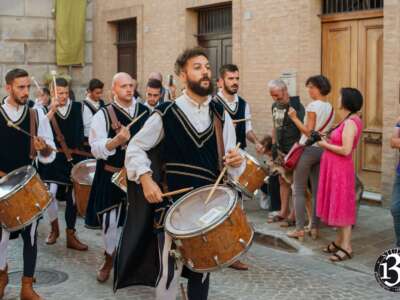
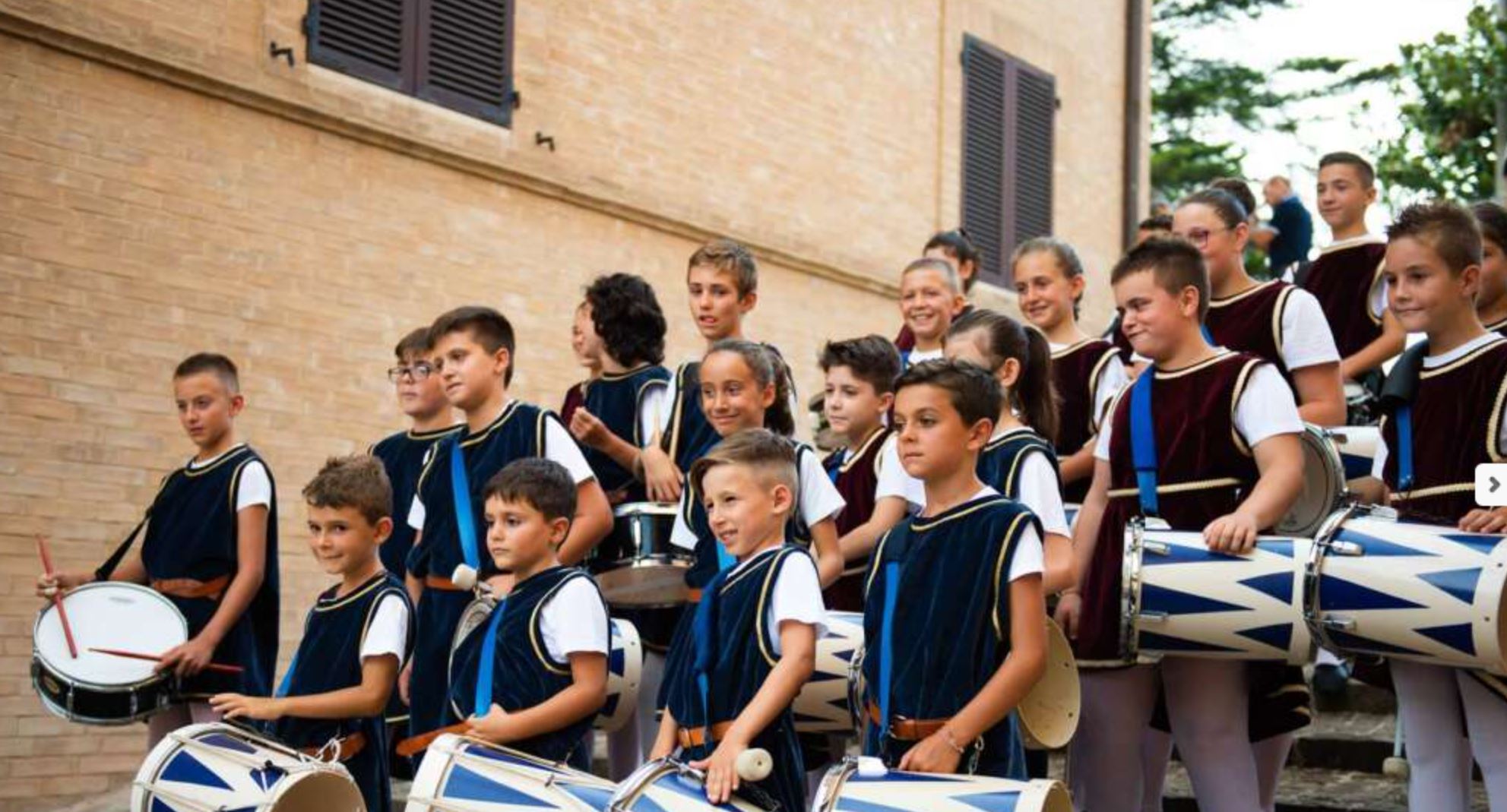
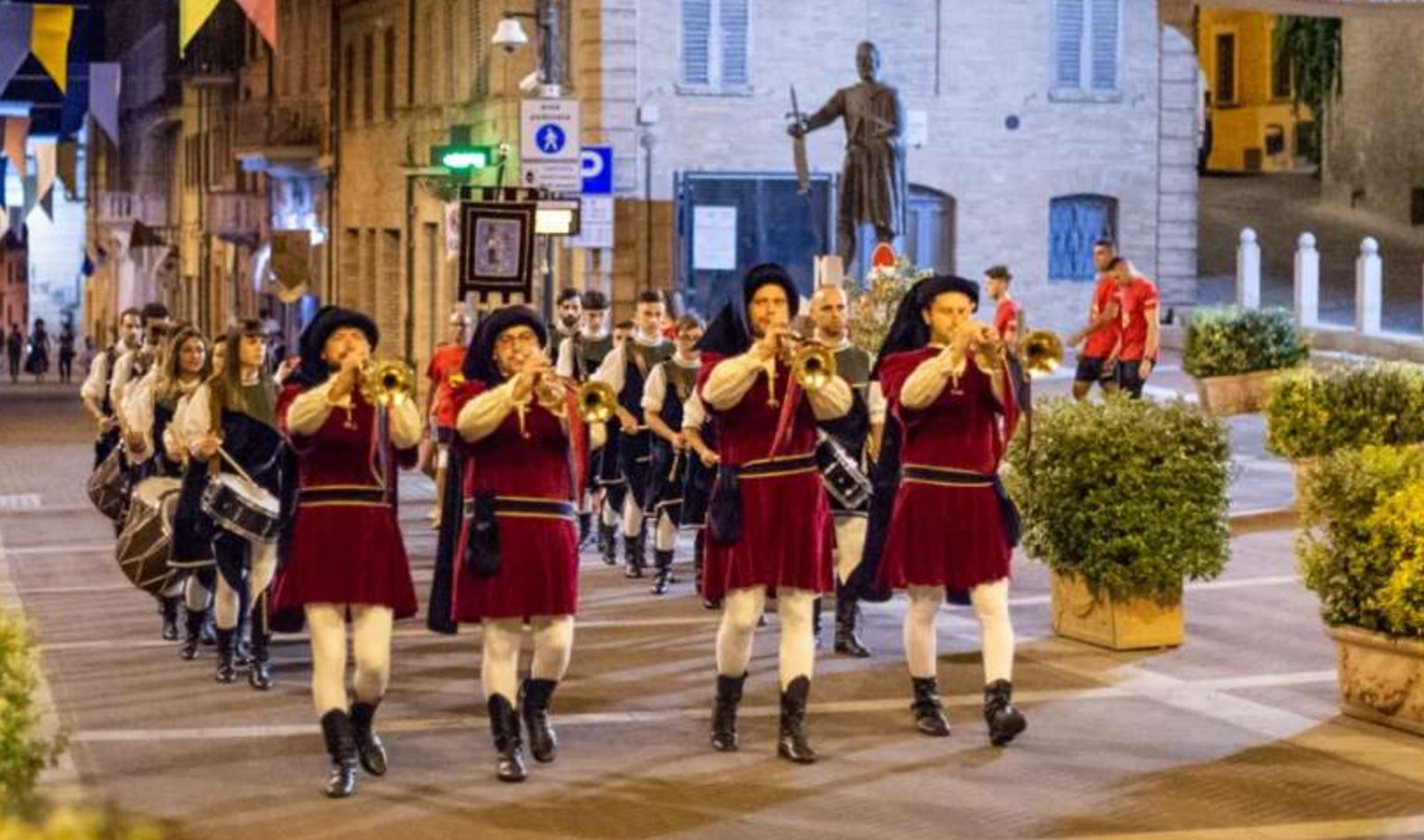
While trumpets and drums provide the sounds of the parade, the flag-wavers precede the “Effigy,” lifted on a cart pulled by the patience of a horse and its handler.
The order and choreography of the procession are entrusted to the Captain of the People, the deus ex machina of the event, whose share of glory must be contested with the Master of the Contesa, who directs the relay and the districts—the essential element of the entire historical reenactment.

The Contesa dello Stivale in Filottrano offers several main attractions that combine history, legend, and entertainment. Here are some of the event’s key attractions:
- Historical Procession: An impressive parade with over 500 costumed participants marching through the streets of the historic center, accompanied by trumpet and drum players, flag-wavers, and representatives of the districts and twinned towns.
- Medieval Games: Events include the goose race, sack race, three-legged race, egg toss, tug-of-war, and stilt race.
- Armed Camp: On Saturday afternoon, the armed group of the Società dello Stivale sets up a camp with archery sessions.
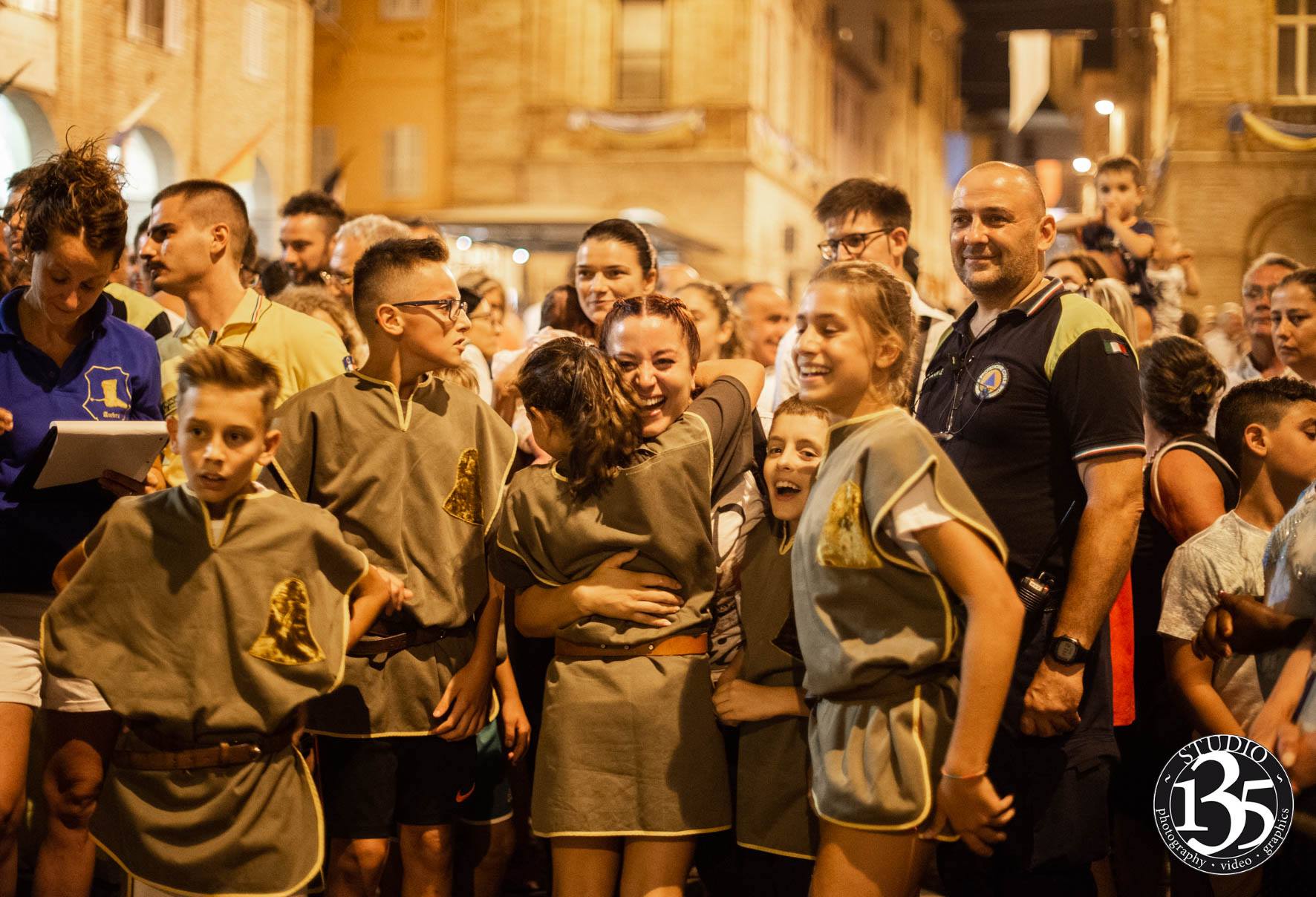
- Minicontesa and Junior Contesa Processions: Events dedicated to the younger participants, with parades and competitions specifically designed for children.
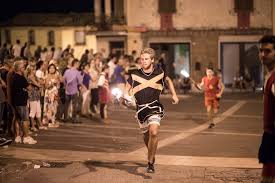
- Relay Race: The final race between the districts, in which each team must carry a lit torch without extinguishing it. The winning district sets fire to the straw effigy representing the Osimo knight.
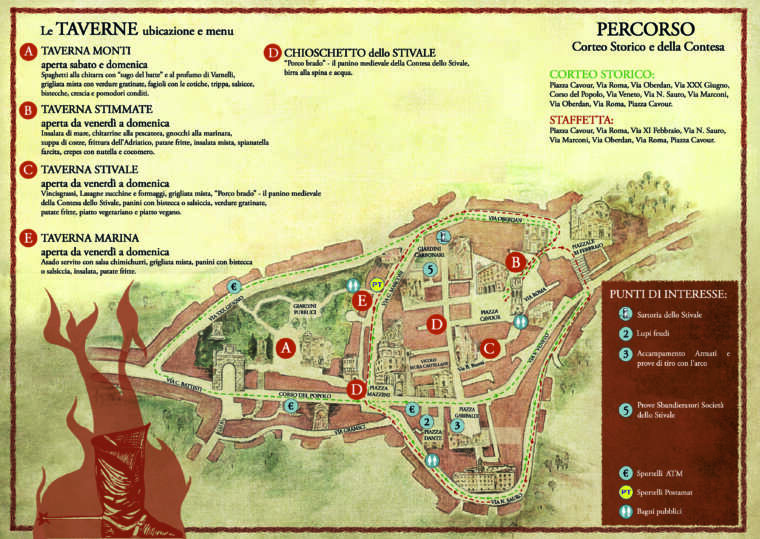
- Medieval Markets and Taverns: Offer local dishes and artisanal products, creating a complete medieval atmosphere.
The main characters of the Contesa dello Stivale are closely linked to the historical event and its reenactment. Here are some of the key figures:
- The Osimo Soldier: An Osimo soldier who, during a punitive expedition in the 15th century, left behind a boot while fleeing. This boot became the symbol of the Filottrano people’s revenge against Osimo.
- The Straw Effigy: A straw figure wearing the historic boot that represents the Osimo soldier. This effigy is paraded through the town and burned at the end of the reenactment as part of the tradition.
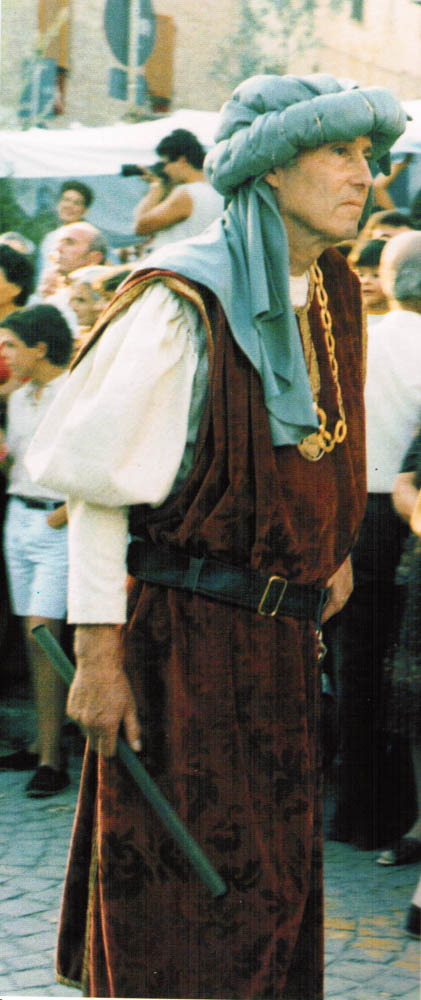
- Captain of the People: A character invested with authority during the reenactment, representing the local leadership. He participates in the historical procession along with other performers.
- Ladies and Knights: Performers representing the nobility of the time, participating in the historical procession in period costumes.
- Villagers and Soldiers: Other performers portraying common citizens and soldiers of the era, adding realism to the reenactment.
- Flag-wavers (Sbandieratori): A group performing choreographed routines with flags, representing a medieval tradition of strategic communication.
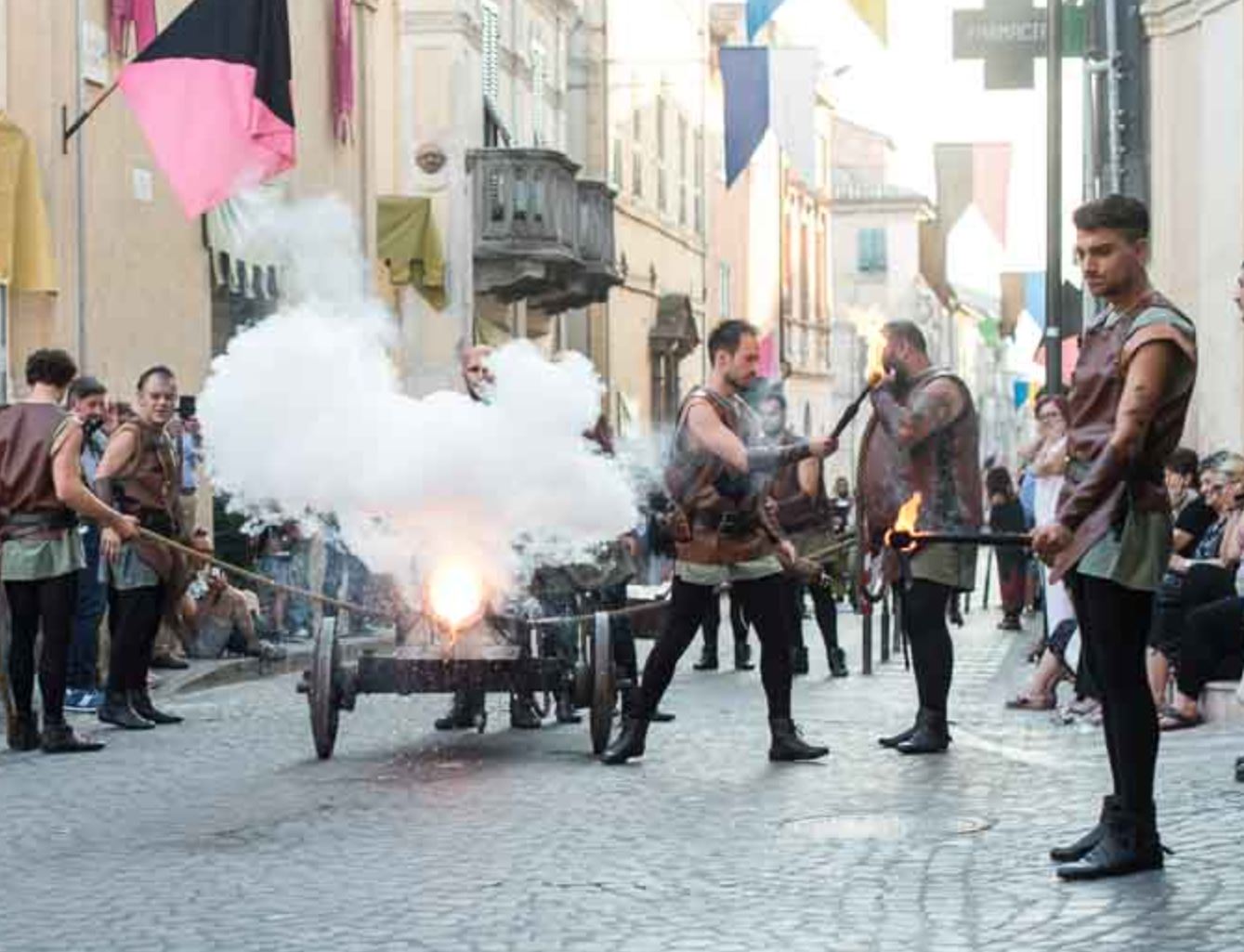
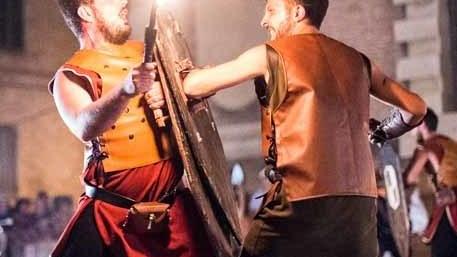
- Gunners and Crossbowmen: Groups that simulate medieval combat, using reconstructed weapons such as cannons and crossbows.

Multimedia