Historic Filottrano – A Walk Through Walls, Faith, and Memory

Discover
Houses and Fortifications Spirituality Arts and Culture Nature Itinerary
In the heart of the ancient Marches

Historic Filottrano – A Walk Through Walls, Faith, and Memory

A walking journey through medieval walls, sacred art, and timeless views in the village.
1 day
Urban Path
Throughout the year
Easy and relaxing

This itinerary is a fascinating journey through the historic heart of Filottrano, a town that reveals its long history—from its Lombard origins to its architectural splendors and the painful memories of World War II.

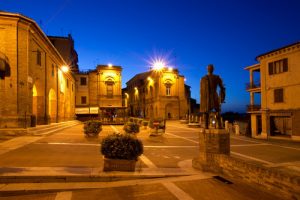
The route ideally begins with a tribute to the legendary past of the town: the Statue of Ottrano in Piazza Mazzini. According to tradition, this figure was the Lombard founder of the castrum and provides the perfect introduction to the town’s history. Behind it stands the imposing Porta Nuova, the main gateway marking the entrance to the ancient 14th-century city walls.

Passing through the gate, you arrive at the vibrant Piazza Mazzini, the true beating heart of life in Filottrano. It is an elegant and welcoming square, known for its panoramic loggia that opens onto breathtaking views of the gentle Marche hills surrounding the town.

From here, the itinerary leaves the central Corso to enter Vicolo delle Mura Castellane. The journey takes on a medieval character here, leading to the remains of the fortifications. The most distinctive feature is the Octagonal Tower, a rare example of military architecture whose eight-sided plan reflects the defensive engineering of the era.

Returning to Corso del Popolo, the route continues to Piazza Garibaldi, where the Church of the Holy Stigmata is located. Its intentionally simple and austere façade hides a surprising and sumptuous interior, a celebration of Baroque decorations, frescoes, Corinthian capitals, and a fine wooden altar.

A little further on the right lies the Monastery and Church of Santa Chiara. Founded in 1578, it stands out for its reddish façade adorned with a statue of the Virgin. History is still alive here: the Clarisse Monastery remains active, devoted to a cloistered monastic life.

Continuing through the alleys of the historic center, you reach the Church of San Francesco (1531), another gem that deserves a contemplative pause.

Next to San Francesco rises the seat of civic power: the Palazzo del Comune. This fine Renaissance building (1530) is flanked by the slender Civic Tower, recognizable by its clock and evocative battlements, symbolizing the town’s identity.

Descending toward Porta Marina, you encounter the majestic Church of Santa Maria Assunta (1679). Fully Baroque, it is a small treasure chest of art, housing important paintings by artists such as Parrocel and Van Schayck. Here, with due respect, rest the remains of Giacomo Costantino Beltrami, the famous Filottrano-born explorer and patriot.

The walk concludes in a place of rest and remembrance. Accessible via a scenic white staircase, the Public Gardens offer a splendid panoramic area, perfect for a restorative pause next to the Monument to the Fallen.

A little beyond the gardens stands the millennial Church of San Cristoforo, founded in 1218 by the monks of Fonte Avellana. Its architecture, a fascinating blend of Romanesque and Gothic elements, houses inside a valuable cycle of frescoes, including The Last Supper, the Baptism, and the Nativity.

Finally, for those wishing to delve into more recent history, the Permanent World War II Exhibition (often reachable with a short drive) and the Filottrano Battle Memorial (July 1944) offer a moving tribute to the memory of one of the bloodiest clashes on the Adriatic front.

1. Luca Paolorossi Tailoring

Via dell’Industria (a short distance from the town center, reachable in a few minutes)
Italian-made tailoring excellence – bespoke suits, home of the School of Arts and Crafts
Near the stop: Church of San Cristoforo / Public Gardens


2. Ceras Tailoring – Cesare Coppari

Via San Cristoforo, Porta Marina area
Bespoke suits, classic cuts with refined details
Near the stop: Church of Santa Maria Assunta


3. Filottrano Artisan Shops

Corso del Popolo / historic center
Small local shops: ceramics, embroidery, textile crafts
Near the stops: Piazza Mazzini / Church of the Holy Stigmata / Monastery of Santa Chiara


4. Creazioni Baleani

Via Cantalupo, 6/A
Handcrafted accessories and clothing, with touches of sartorial style
Near the stop: Porta Marina / Church of Santa Maria Assunta (reachable with a small detour)

1. Wally Café & Gelateria

Corso del Popolo, 46
Artisanal gelato, coffee, breakfast options
Near the stops: Piazza Mazzini / Church of the Holy Stigmata / Monastery of Santa Chiara
Ideal for a sweet break halfway along the route


2. La Sosta – Coffee Bar

Via Bartoluccio, 12/A
Special cappuccinos (including pistachio), croissants, savory snacks
Near the stop: Public Gardens / War Memorial
Perfect for breakfast or a break after visiting the Church of San Cristoforo


3. Giuliodori Pastry & Coffee Shop

Piazzale XI Febbraio, 22
Artisanal pastries and cookies, gelato, also options for celiacs
Near the stop: Statue of Ottrano / start of the route
An excellent starting point for a takeaway breakfast or snack


4. Caffè Centrale

Corso del Popolo (at Piazza Mazzini)
Historic bar with outdoor seating, aperitifs
Near the stop: Piazza Mazzini / Octagonal Tower / Town Hall
Ideal for a relaxed break in the town center

1. Ca' Vecchia Beerstrot

Via Centofinestre, 20
Near the Monastery of Santa Chiara
Creative sushi, gourmet burgers, and a selection of craft beers
Ideal for a modern break in an original setting


2. Ristorante Sottosopra

Via dell’Industria, 83
Just beyond the historic center, reachable with a small detour
Traditional first and second courses, revisited with style
Perfect for lunch or dinner after the itinerary


3. Bar/Restaurant La Sosta (light option)

Via Bartoluccio, 12/A
Close to the final stretch of the route, near the Public Gardens
Breakfasts, quick dishes, and coffee
Ideal for an informal break halfway through the walk
Historic Filottrano – A Walk Through Walls, Faith, and Memory
1

Mazzini Square – Garibaldi Square

Mazzini Square – Garibaldi Square
120-meter walking itinerary
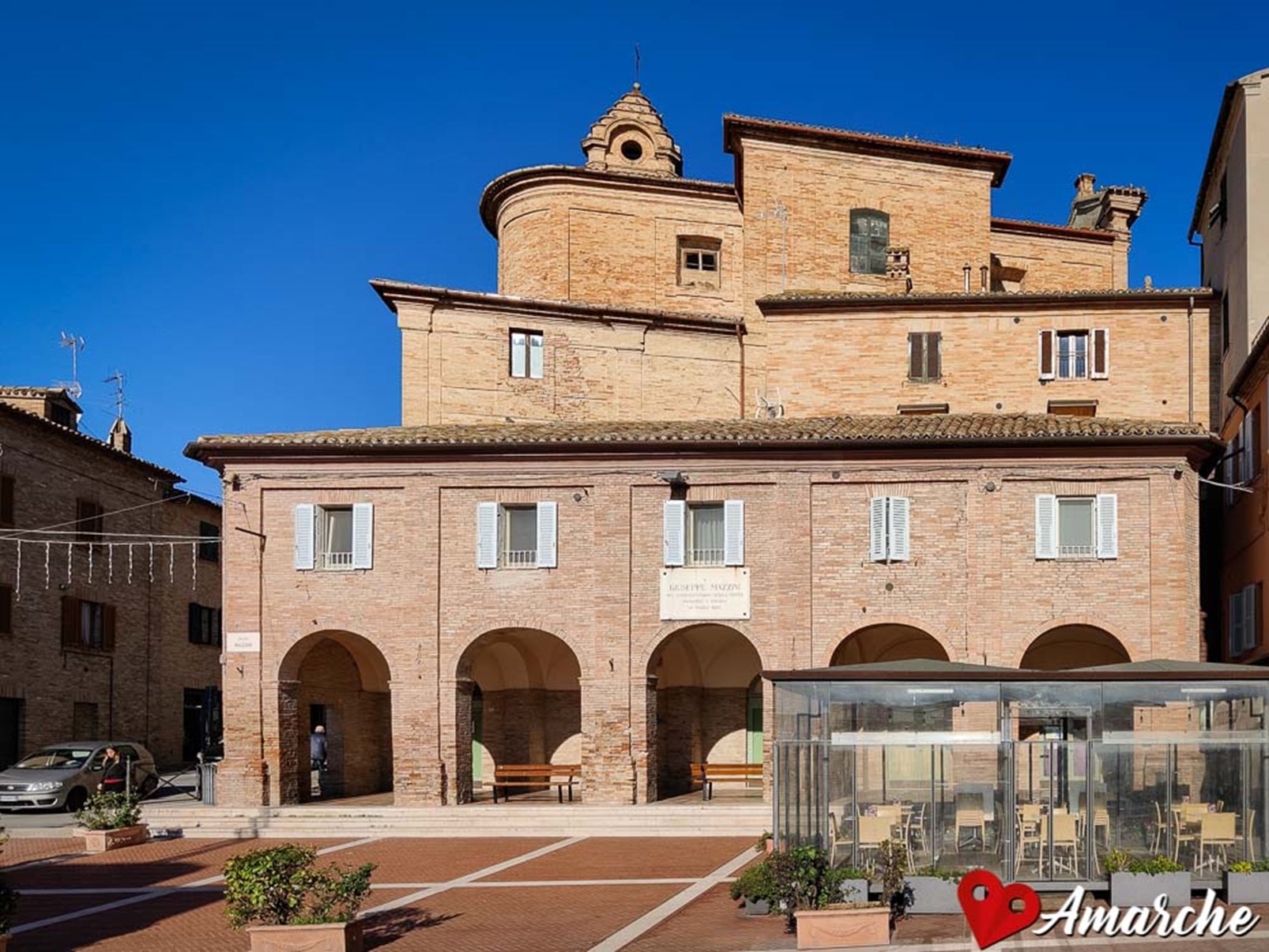
Begin your exploration in the beating heart of Filottrano, Piazza Mazzini, where history unfolds as an open dialogue between eras: the Statue of Ottrano, the legendary Lombard founder, welcomes you, introducing the town’s distant past, while in front of you stands the imposing arch of Porta Nuova/Porticella, the majestic entrance to the 14th-century city walls. This elegant square, with its panoramic loggia, offers the first breathtaking views of the Marche hills, making it a perfect spot for a “piazza pause” and a coffee before continuing your journey. You walk along the elegant and short Corso del Popolo, a stroll of just a few minutes past ancient brick palaces and local shops, where thoughts turn to Filottrano’s tailoring tradition—a vibrant center of Italian craftsmanship, recalling skillful cuts and fabrics. The Corso opens onto Piazza Garibaldi, where the atmosphere suddenly becomes more intimate and conventual: on the left, the austere façade of the Church of the Holy Stigmata conceals a surprising interior, rich with Baroque decorations, frescoes, and an imposing wooden altar; on the right, the severe ensemble of the Church and Monastery of the Clarisse closes the perspective, with its reddish façade and the statue of the Virgin, a testament to a still-active and contemplative monastic life. From Garibaldi, the path becomes more intimate along the alleys leading to the Church of San Francesco (1531), followed immediately by the civil power at the heart of the historic center: the Palazzo del Comune, a refined Renaissance building from 1530, flanked by the tall merloned Civic Tower with its clock. Continuing downhill towards Porta Marina, the Church of Santa Maria Assunta (1679) is revealed, a Baroque treasure housing paintings by artists such as Parrocel and Van Schayck, and most notably, the tomb of Giacomo Costantino Beltrami, the Filottrano-born explorer and patriot. The itinerary concludes with a climb up the white steps to the Public Gardens, a panoramic green area ideal for a pause and reflection next to the Monument to the Fallen, before reaching the millennial Church of San Cristoforo, erected in 1218—a masterpiece blending Romanesque and Gothic styles, enchanting visitors with its ancient frescoes, including The Last Supper and The Nativity. Finally, for those wishing to honor more recent history, a visit to the Filottrano Battle Memorial and the Permanent World War II Exhibition is highly recommended—a moving tribute to the events of July 1944.
2

Clarisse Monastery – Town Hall (Palazzo del Comune)
Clarisse Monastery – Town Hall (Palazzo del Comune)
230-meter walking itinerary
Your walk begins by leaving the quiet seclusion of the Clarisse Monastery (Vicolo delle Monache), emerging into the bright Piazza Garibaldi. You immediately enter Corso del Popolo, the main artery connecting the town’s squares. In this short stretch, you feel the transition from the sacred to the everyday—a quick return to the lively rhythm of the town center. After a few minutes, turn onto Via Giacomo Leopardi to reach almost immediately the Church of San Francesco (civic number 15). This building occupies a strategic position, practically leaning against the main square. If you are fortunate enough to find it open, step inside: you will discover a surprising interior with a large single nave, decorated with rich late-Baroque light stuccoes and enriched by 16th-century works by local artists such as Morganti and Ramazzani. From San Francesco, just a few steps bring you to an open scene—it’s like a theatrical effect. You find yourself in Piazza Cavour, with the side of the church serving as a scenic backdrop. In front of you stands the elegant Palazzo Comunale, with its distinctive Renaissance-Bramantesque style and the imposing Civic Tower. You have arrived at the civic heart of the town, completing the itinerary that has taken you from the monastic cloister (the Clarisse) to the seat of city power, traversing alleys where Filottrano’s history still pulses alive. (Accessibility note: both San Francesco and Piazza Cavour are marked as accessible, with dedicated parking and facilities.)
3

From Santa Maria Assunta to the Monument to the Fallen
From Santa Maria Assunta to the Monument to the Fallen
450-meter walking itinerary
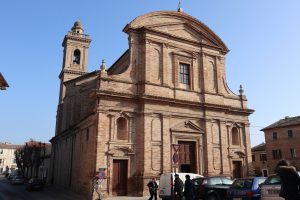
Your walk begins at the forecourt of the Church of Santa Maria Assunta (La Pieve), strategically located at Piazzale XI Febbraio 13, right in front of Porta Marina/Arco Perozzi. Starting from this church, which historically stood outside the city walls, is like crossing a threshold in time, leaving the civic heart behind to immerse yourself in a more ancient dimension. Follow the walls and take Via San Cristoforo: in a few steps, you reach the Church of San Cristoforo (No. 19). This is one of the oldest churches in Filottrano and undoubtedly deserves a pause and a slow, contemplative look inside, where precious 15th-century frescoes are preserved. Continuing straight on Via San Cristoforo, the itinerary turns onto Via Guglielmo Oberdan. Here, the scene begins to change, introducing the theme of remembrance: the Public Gardens (entrance at No. 1) open up, a green area inviting rest and reflection. From this garden entrance, the final stage of the route unfolds: the white staircase leading up to the Monument to the Fallen. Today, this monument is located in the green area known as Giardini/Morigi, but its position near Via XXX Giugno evokes a solemn historical event: the massacre of June 30, 1944, also commemorated by a small marker in the gardens. Although the last stretch involves steps (creating an architectural barrier), the flat green area is still perfect for a contemplative pause, paying tribute to history in a place of serene remembrance.