
The Five Bell Towers Trail

Discover
Culture Spirituality Enogastronomy Itinerary
FILOTTRANO to discover

The Five Bell Towers Trail

A journey through faith, art, and history in the heart of the Marches.
1 day
Urban Path
Throughout the year
Easy

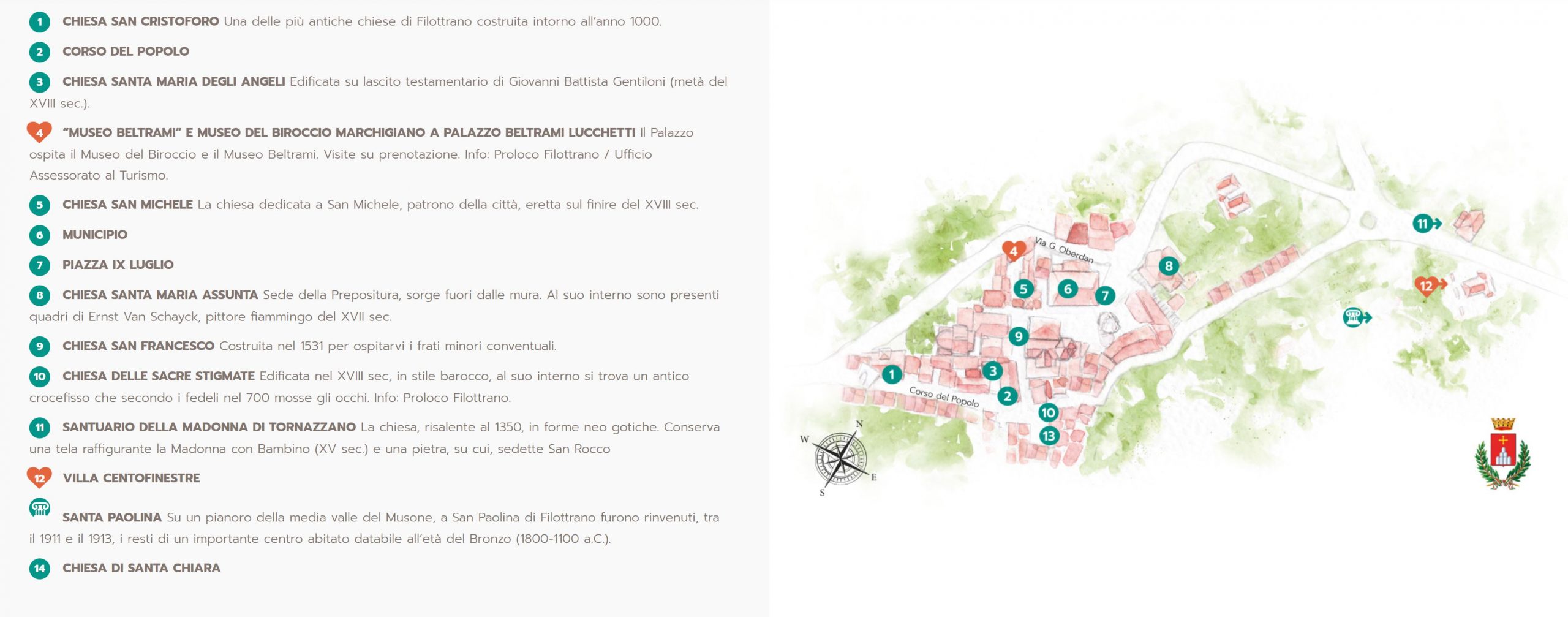
The Five Bell Towers Trail in Filottrano is a walking route that guides visitors through the city’s main historic churches, offering an immersion into its rich cultural and spiritual heritage. This journey allows for the exploration of sacred buildings from different eras, each with its own history and architectural peculiarities.

Stages of the Itinerary:

  1. Church of San Cristoforo: One of Filottrano’s oldest churches, dating back to the year 1000, it represents a significant starting point for understanding the city’s religious roots.
  2. Church of Santa Maria degli Angeli: Built in the 18th century on a legacy from Giovanni Battista Gentiloni, it bears witness to the evolution of local sacred architecture.
  3. Church of San Michele: Dedicated to the patron saint of Filottrano, it was reconstructed at the end of the 18th century and is distinguished by its imposing structure.
  4. Church of San Francesco: Built in 1531 to host the Franciscan friars minor conventual, it preserves important works of art.
  5. Church of the Sacred Stigmata (Chiesa delle Sacre Stigmate): In 18th-century Baroque style, it guards a crucifix considered miraculous by the faithful.

This itinerary not only offers an in-depth look at Filottrano’s religious history but also allows visitors to admire the art and architecture that characterize these churches, making it an unmissable experience for anyone visiting the city.

5 Bell Towers

Bar Centrale: Located along Corso del Popolo, it is an ideal spot for a coffee break or an aperitif.

Caffè del Corso: Also on Corso del Popolo, it offers a selection of sweets and drinks.

La Bottega dei Sapori: Specializes in local food and wine products, such as cured meats, cheeses, and wines from the Marche region.

Enoteca Marchigiana: Offers a wide range of regional wines and extra virgin olive oils.

Tailoring Workshop Luca Paolorossi: Renowned tailor offering high-quality custom-made clothing. Master tailor Luca Paolorossi also founded the School of Arts and Crafts to train new artisans in the fashion sector.
lucapaolorossi.it

Ceramiche Artistiche Filottranesi: Workshop producing hand-decorated ceramics representing the local tradition.

Dolce Vita Pastry Shop: Known for traditional Marche sweets and artisanal cakes.

I recommend taking a leisurely stroll along Corso del Popolo and the surrounding streets to discover these and other local businesses that help keep Filottrano’s artisanal and gastronomic traditions alive.
The Five Bell Towers Trail
1

San Cristoforo – Beltrami/Biroccio Museum
San Cristoforo – Beltrami/Biroccio Museum
There are many different points of interest that allow you to explore art, religious architecture, local history, and popular culture.
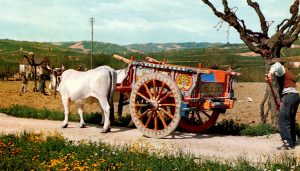
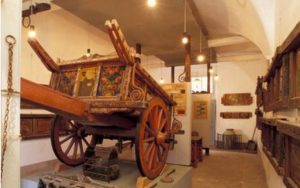
The Church of San Cristoforo is a true witness to the history of Filottrano and is counted among the oldest churches in the city, with origins dating back to around the year 1000. The building features a deliberately simple structure, characterized by a single nave that highlights its essential nature. However, its greatest value lies inside, where precious 15th-century frescoes are preserved—well worth a contemplative pause. Corso del Popolo is the main axis and the beating heart of Filottrano’s historic center. It is the principal street that connects and energizes the town, offering a pleasant urban stroll. Walking along the Corso, you can take in the local architecture, admiring historic and elegant buildings, passing by local shops, and enjoying unexpected panoramic views. Simply keep to the right to reach the next fascinating stop. Located on Corso del Popolo at the intersection with Via Gentiloni, the Church of Santa Maria degli Angeli stands out for its devotional history. It was built in the second half of the 18th century thanks to the last will and testament of Giovanni Battista Gentiloni. Its façade, though simple, is marked by a harmonious design, while the interior is a small treasure chest that preserves artworks specifically tied to Marian devotion, inviting visitors to reflection. The evocative Palazzo Beltrami Lucchetti is a cultural hub that houses not one, but two highly interesting museum itineraries. You will find the Museum of the Marche Biroccio, a fascinating exhibition dedicated to the region’s traditional farm carts, known for their vivid decorations. Next to it, the Beltrami Museum preserves memorabilia, documents, and works that recount the life and achievements of Luigi Beltrami. Since visits are available by reservation, it is advisable to contact the Pro Loco Filottrano or the Tourism Office in advance to arrange your visit.
2

Beltrami/Biroccio Museum – Church of San Francesco
Beltrami/Biroccio Museum – Church of San Francesco
This section guides you from the Beltrami Museum to the area around the Church of San Francesco, passing by churches, squares, and the town’s institutional heart.
Begin your itinerary at the elegance of Palazzo Beltrami Lucchetti, and head towards the first stop: the Church of San Michele. This place of worship, dedicated to the patron saint of Filottrano, was magnificently rebuilt at the end of the 18th century, showcasing a solemn neoclassical style. Its façade is imposing, but inside you will find surprises, including preserved paintings and sacred furnishings of great artistic value. From here, just a few steps away, you reach the Municipality of Filottrano, an elegant civic building centrally located that represents the administrative heart of the city. While visits are limited to the exterior, it is worth admiring its centrality and architecture. The route then opens onto the spacious Piazza IX Luglio, dedicated to the liberation of the city on that day in 1944. This square offers exceptional panoramic views, where you can enjoy splendid vistas of the surrounding hills and the historic town center. Continuing a little outside the walls along Viale Trento e Trieste, you encounter the Church of Santa Maria Assunta. This is the town’s main parish church, an impressive building situated in a panoramic location, housing valuable works inside, including 17th-century paintings by the Flemish painter Ernst Van Schayck. The itinerary finally leads to the Church of San Francesco, located at Via Dante Alighieri, 7. Founded in 1531 for the Conventual Franciscan friars, it appears modest from the outside but, as often happens in Filottrano, reveals an interior with a remarkable artistic heritage. The entire route covers a total distance of about 600 meters, walkable in roughly 10 minutes (excluding the time needed for visits). If you wish to enrich your experience, I can also point out local food and wine spots, shops, or cafés in this area, such as in Piazza IX Luglio or near Via Dante, perfect for a break.
3

Church of San Francesco – Church/Monastery of Santa Chiara
Church of San Francesco – Church/Monastery of Santa Chiara
The third and final stage of the walking itinerary, taking you to spiritual, historical, and natural sites, culminating at the magnificent Church of Santa Chiara.
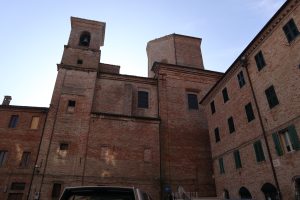
Your exploration continues from the Church of San Francesco, heading toward the devotional and historical heart of the town. The first stop is the Church of the Holy Stigmata on Via Umberto I, a remarkable example of 18th-century Baroque style. The true focus of this place, however, lies inside: a miraculous 18th-century crucifix, famous in popular tradition for having “moved its eyes” in the past—a detail that enhances its aura of faith and mystery. Leaving the town center, a short walk brings you to the Sanctuary of the Madonna of Tornazzano. Although its foundation dates back to 1350, the sanctuary was restored in an elegant Neo-Gothic style. Inside is preserved a precious 15th-century painting of the Madonna and Child, as well as the stone on which tradition holds that Saint Roch once sat. The itinerary then turns toward secular magnificence with Villa Centofinestre, a splendid 18th-century noble villa that captivates with its architecture. Admire its neoclassical façade and meticulously maintained Italian-style gardens. Although the villa is visitable only by reservation—often serving as a venue for cultural events—it stands as a tangible symbol of the area’s historical grandeur. Finally, the route returns to the sacred and serene with a visit to the Monastery and Church of Santa Chiara. Founded in 1578, this complex is still active today, preserving an atmosphere of deep contemplation and offering a spiritual refuge as well as a magnificent example of historic conventual architecture.