2. Piazza Mazzini: the heart of the town
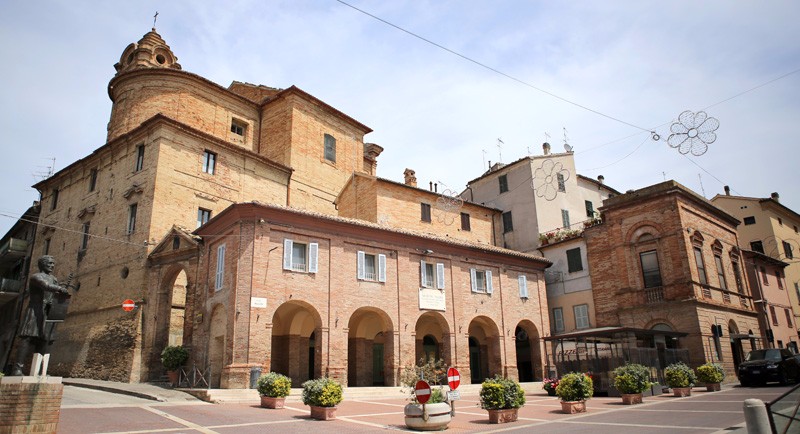
Piazza Mazzini, also known as "metà corso" (half boulevard), as it divides the long and refined Corso del Popolo into two almost symmetrical parts. This street was created at the end of the 19th century by demolishing the ancient Porta Romana, with the goal of connecting the town's medieval core with the 18th-century area. At one time, a large arch connected the two imposing red brick palaces that still face each other today: the one housing Bar Wally and its twin across the street.
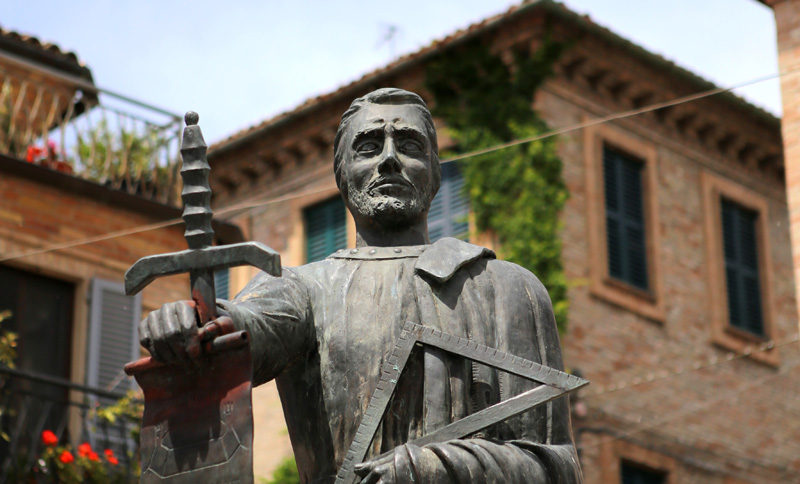
The square is embellished by an elegant loggia, from which one can enjoy a spectacular panorama that stretches from Mount Conero all the way to Macerata, Recanati, and Loreto. At the center stands the bronze statue of Ottrano, the Longobard from whom, according to some theories, the city’s name Mons Filiorum Ottrani derives.
Next to the loggia is a small arch, Porta Nuova (also known as Porticella), flanked by an elegant staircase that leads to the oldest part of the borough.
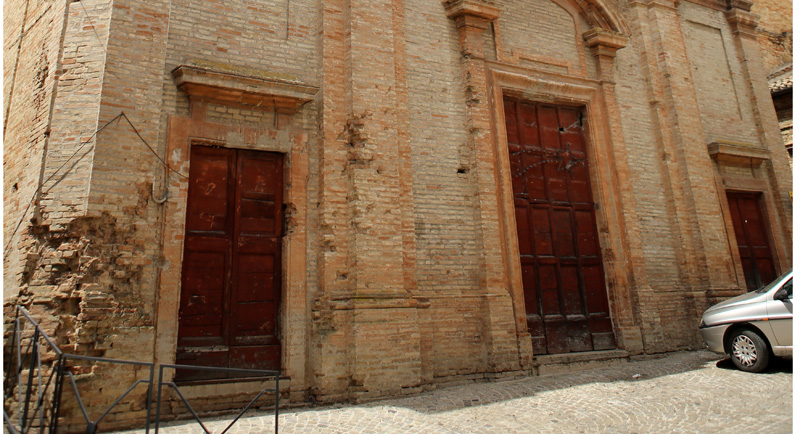
Right next to the staircase stands the Church of the Angels (Chiesa degli Angeli), which is now deconsecrated. For years, it hosted a striking artistic nativity scene made of papier-mâché, so large that visitors could walk inside. Unfortunately, following the 2016 earthquake, the nativity scene was removed.
Observing the façade and the church’s side wall along the staircase carefully, one can still notice the marks of the grenades that exploded during the Battle of Filottrano in 1944. This crucial conflict for the town’s liberation paved the way for the subsequent liberation of Ancona. One of the most evident hits is visible on the corner of the church, right at the beginning of the staircase.
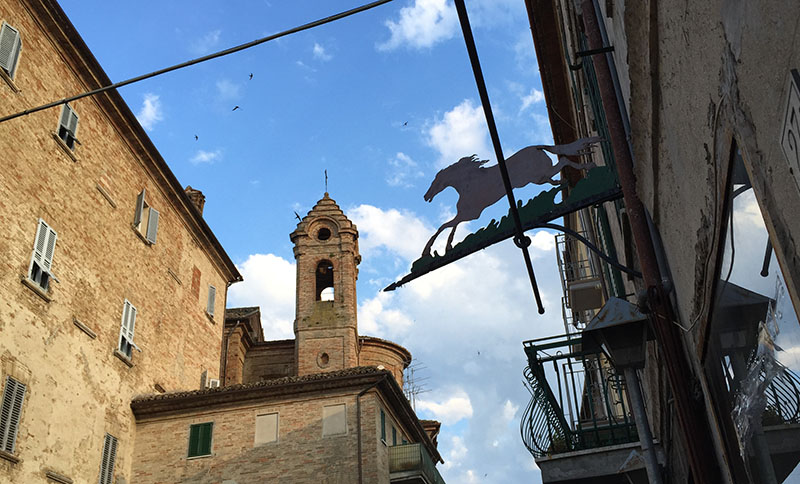
As you ascend, pause on an interesting detail: at the corner of Via Leopardi, you will find a commemorative stone monument (cippo commemorativo). From this spot, if you look closely, it is possible to glimpse as many as five surrounding churches—try to spot them all! Furthermore, directly opposite the monument, on the doorframe of a building, you will notice a small drawn parachute: a symbol left by the paratroopers of the Nembo Division, who were key protagonists in the Battle of Filottrano.
Multimedia