DOCUMENTS and SOURCES that talk about FILOTTRANO

  1. Persée: This website describes the locality of Santa Paolina in Filottrano, known for its Gallic Senones archaeological finds. A Gallic necropolis with an important burial ground is mentioned.
  2. Altra Linea Edizioni: This source discusses the historical residences of Filottrano, emphasizing the importance of noble families such as the Perozzi, the Palmucci, and the Spallicci. The historic center was expanded between the Middle Ages and the Renaissance.
  3. Istituto Storia Marche: This institute mentions Filottrano in the context of the Second World War, even though it was not directly involved in the Val Musone massacre.
  4. La Rucola: This article discusses the origin of Filottrano and its historical centrality in the Piceno territory, with references to its strategic position.
  5. Il Postalista: This website discusses the postal history of Filottrano, mentioning its ancient name “Monte Filottrano” and its structure as a walled oppidum.

Stories of the Marche

Ecco la traduzione in inglese della descrizione del Museo delle Macchine da Cucire:

The art of knowing how to create fabrics and sewing them to make clothes and artifacts has always been an element that characterized humanity. The advent of the first sewing machines between the late eighteenth and the first half of the nineteenth century revolutionized not only industry but also the way people worked at home.

Gustavo has always worked in the textile sector (Filottrano is its home) and, traveling the world, began collecting antique sewing machines, eventually amassing a truly rich collection that has now become a museum. The museum is located in the historic center of Filottrano, between the Porta Marina entrance and the Trattoria il Gallo Rosso, right opposite the Pieve church. The Museum is also his workshop where you can buy, repair, or learn to use a sewing machine.

The Museum is arranged over several floors, and you will be fascinated when you descend into the perfectly restored palace caves, which also preserve part of the ancient castle walls.

The Museum of Sewing Machines: The Collection
The collection is truly vast, with as many as 250 pieces on display, which, however, constitute only a portion of the entire collection owned by Boresta. His passion was born from the Regina Margherita sewing machine owned by his grandmother.

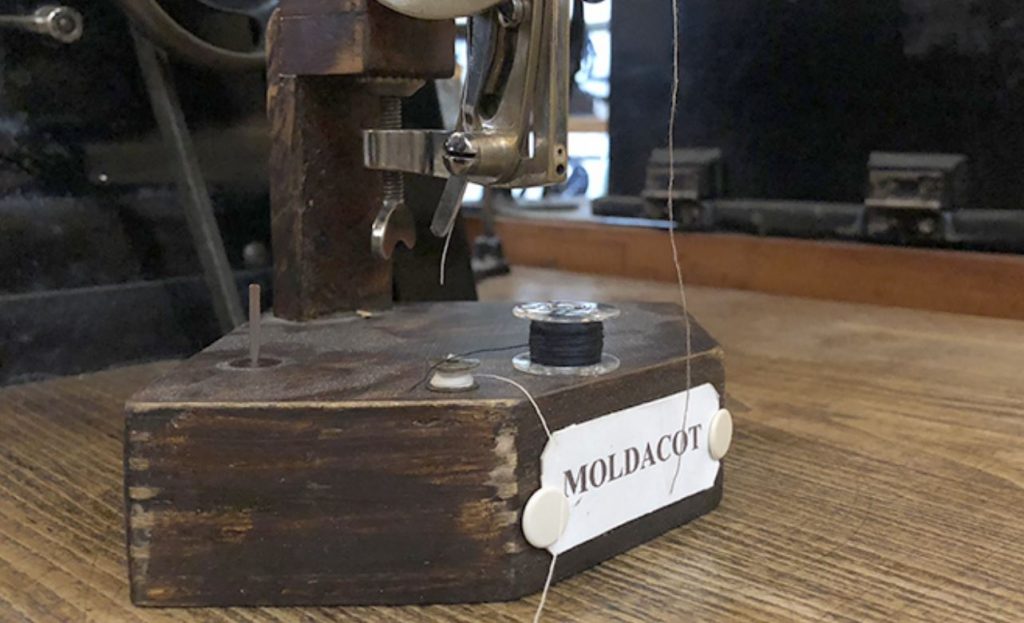
His collection boasts pieces from the nineteenth century, portable sewing machines (like the Moldacot, which cost a fortune and only the most affluent ladies could afford), and even a surgical sewing machine. You will see the evolution of the apparatus, the various experiments with the hand crank, and how the decorations and aesthetics changed.

The museum also features a sock machine, a machine for sewing leather and horse saddles, and sewing machines produced by various car manufacturers. On the lower floor, there is also a beautiful collection of antique irons; there is even one made of stone.

All the machines are perfectly functional and include their respective instruction booklets and often the original packaging.

Our Advice?
Let yourself be enchanted by Gustavo’s stories, ask questions and browse—you might even feel the urge to dust off the old sewing machine you have in your attic.

The ‘Dakota Sioux’ exhibition in homage to Giacomo Costantini Beltrami was inaugurated in Filottrano

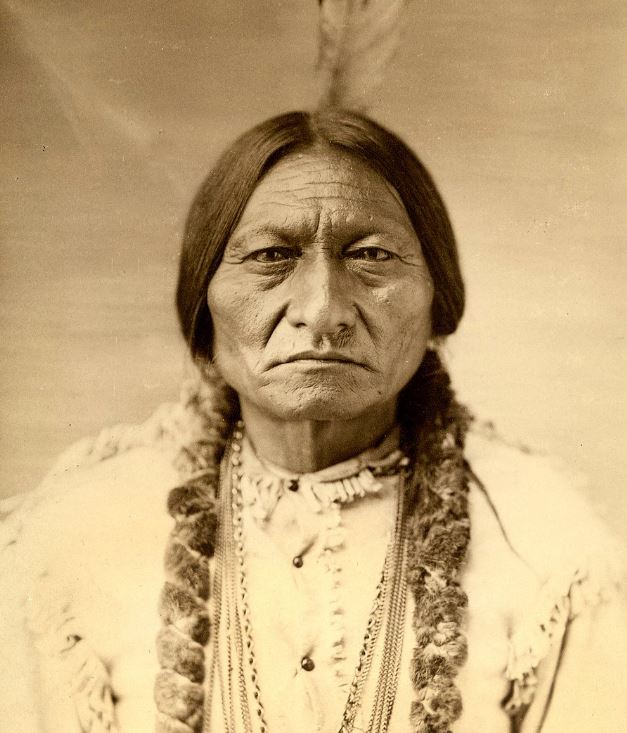
The exhibition, held at Palazzo Accorretti in Filottrano from November 11, 2023, to January 28, 2024, celebrated Beltrami’s connection with the indigenous peoples of America, particularly the Dakota and Sioux tribes, with whom he established a relationship of deep friendship.

  • Homage to the Explorer: The exhibition took place during the bicentenary of Beltrami’s journey that led him to the discovery of the sources of the Mississippi.
  • “The Man with the Red Umbrella”: Beltrami was known among Native Americans as “the man with the red umbrella” due to his umbrella, which he used to shield himself from the sun and rain, and which was perceived as a magical instrument. For this reason, the route to the exhibition in Filottrano was marked by red umbrellas.
  • Collection and Artifacts: The exhibition presented a rich collection of ethnographic and anthropological objects from the Dakota Sioux tradition, sourced from private collections, offering an insight into the life and culture of Native Americans.
  • Recognition: The Municipality of Filottrano sought to honor Beltrami, a historical figure who was among the first to respectfully document Native culture, in contrast to the offensive and inaccurate literature of the time. A county and a city in Minnesota bear his name.

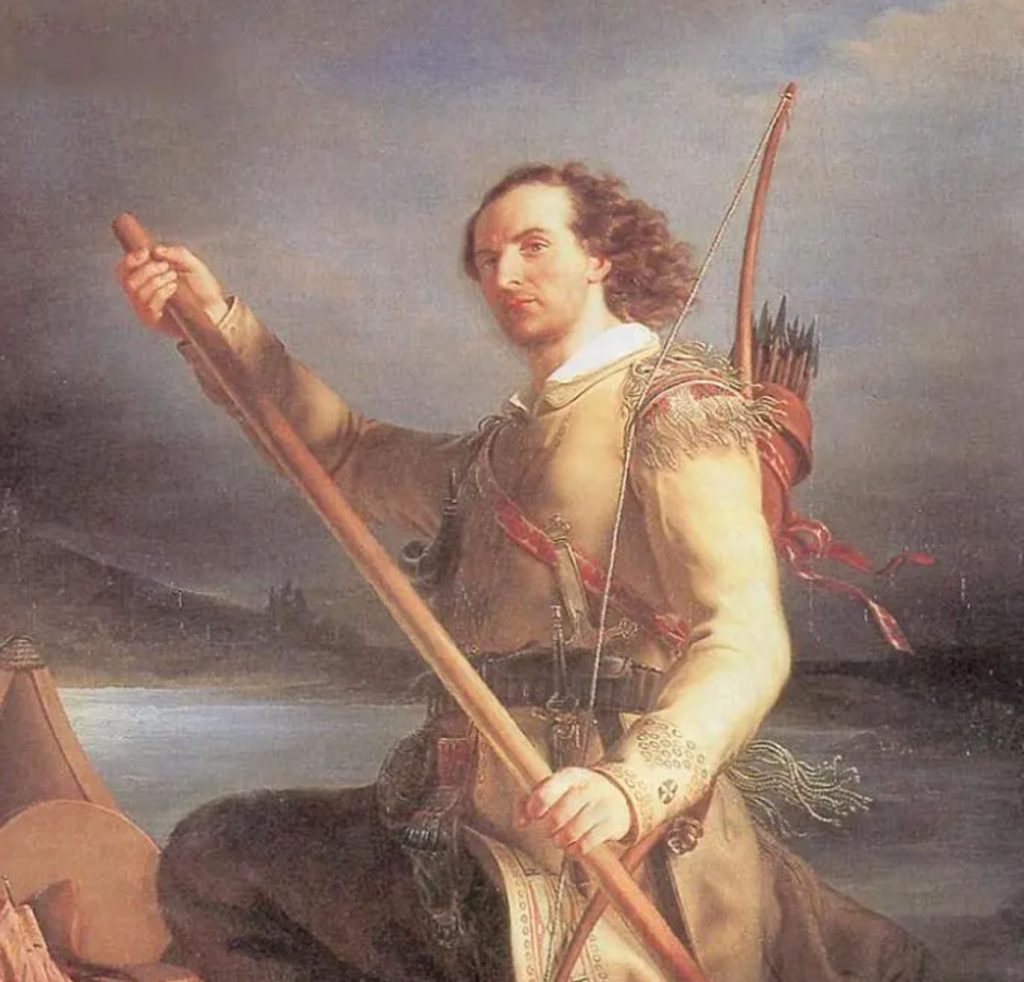
Giacomo Costantino Beltrami

He was one of the seventeen children of a customs official of the Venetian Republic and was born in Bergamo in 1779. His father intended for him to pursue legal studies for a secure and stable career as a functionary, like himself, but the young Giacomo quickly displayed his intolerance for that old and tedious world. With a rebellious spirit like many young libertarian spirits of the era, he wanted to change the world and went to fight for the Cisalpine Republic, founded by Napoleon.

He took part in the first Italian libertarian movements, was imprisoned multiple times, and in 1818 was accused of conspiracy against the Papal States, avoiding the gallows by managing to be acquitted.

A man of both action and thought, it is said that, like many restless spirits of the time, he was a Carbonaro (member of a secret revolutionary society), initiated into Freemasonry, and that he worked as a judge in the Napoleonic Tribunals, first in Udine and then in Macerata. He was pursued by Papal gendarmes for being a free thinker, and perhaps the Enlightenment idea of the myth of the noble savage pushed him toward a friendly attitude toward the Native Americans, or “perhaps free and disillusioned by the burden of apparently tolerant and falsely egalitarian ideologies, he surrendered to the natural passion for adventure and lived like an Indian warrior.”

In 1821, he moved to France, then to London; here too, the situation was confining for his libertarian spirit.

In November 1822, he embarked from Liverpool for Philadelphia in the United States of America, carrying a curious red umbrella, which would characterize him throughout his adventure. In St. Louis, fascinated by the New World and the great prairies, he joined the Clark expedition, whose task was to inspect the forts along the upper course of the Mississippi.

Traveling on horseback or by canoe, he explored the lands of the Sioux and the Chippewa, where he became known and respected for his courage. He showed great interest and respect for the cultural and social traditions of the Native Americans, even compiling an English-Sioux dictionary and writing interesting works on ethnography and geography.

Among these works is “La decouverte des sources du Mississipi e de la Rivière sanglante” (The Discovery of the Sources of the Mississippi and the Bloody River), based on his travel diaries.

He then participated in Major Long’s expedition towards the Canadian border, up to the Red River area, continuing alone toward Red Lake. In an adventurous “ascent,” he unveiled the secret of the origins of the world’s third-longest river, reaching a point where American pioneers had not dared to go in his desire to discover the origins of the Mississippi, the “Father of Rivers” in the language of the Algonquian Indians. He discovered a small lake that he baptized Lake Giulia in honor of his beloved Giulia De Medici Spada.

The figure of Beltrami has not yet been sufficiently studied in Italy; his merits as a geographer and anthropologist have not yet been carefully evaluated.

His impressive correspondence includes letters from Jefferson, La Fayette, Chateaubriand, and Constant, some of which are still unpublished.

In Minnesota, the state’s largest county (Beltrami County) and the mountains containing the sources of the Mississippi bear his name.

The Beltrami Collection
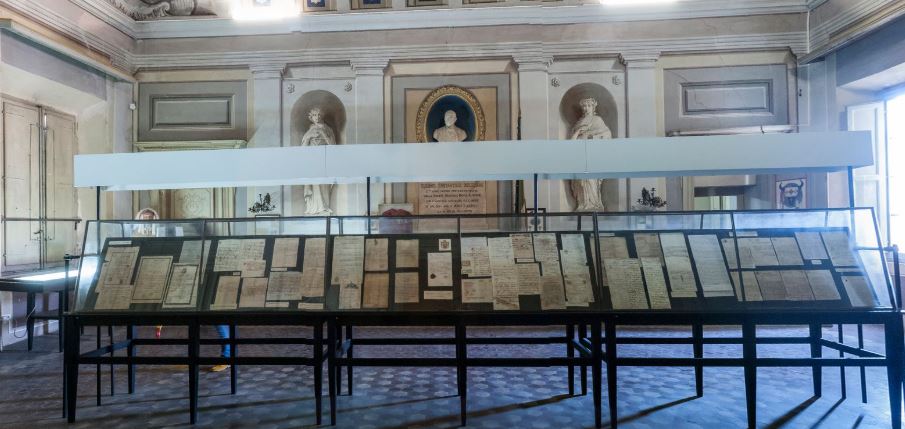
The Bergamo Library holds the “Giacomo Costantino Beltrami Collection“: a mixed fund distributed in seven folders containing documents, travel notes and annotations, press clippings, letters, and various miscellanea; the manuscripts are of notable interest for their rich geographical and ethnographic observations on the visited locations and peoples. The extraordinary objects collected by Beltrami are now divided between the collection at the Ettore Caffi Museum of Natural Sciences in Bergamo and the Beltrami Museum in Filottrano (Ancona).

Costantino Beltrami Collection
Arriving at the Museum in 1917, after being ceded to the Municipality of Bergamo in 1855 by Giobatta Beltrami, the explorer’s nephew, the Giacomo Costantino Beltrami collection is of extremely high historical value, as the objects within it were donated to him by the Native Americans he encountered during his journey in the upper Mississippi River region in the first half of the 19th century.

It includes weapons, ritual objects, and everyday items of the Chippewa and Sioux Indians, as well as interesting artifacts that Beltrami brought with him from Mexico and Haiti, where he traveled after discovering the sources of the Mississippi.

The presence of the diaries that the explorer compiled during his travels, now preserved at the Angelo Mai Civic Library, has allowed scholars from both Italy and the United States to better understand the meanings and uses of the artifacts and enhance their historical significance through in-depth studies.

Part of the artifacts that Beltrami collected during his travels in America are kept at the Beltrami Museum in Filottrano, where the explorer spent part of his life. This is a private collection owned by the Lucchetti family. Invited to Bergamo in 1973 for the celebrations of the 150th anniversary of the discovery of the sources of the Mississippi, Glauco Luchetti donated three highly valuable artifacts to the Museum.
A Project for the Museum of the Mississippi Explorer

A Project for the Museum of the Mississippi Explorer
The museum houses artifacts from the populations of North and Central America collected during the voyages that Giacomo Costantino Beltrami undertook on the American continent, which led him to discover the sources of the Mississippi in 1823. On August 31st of that year, he reached the border with Canada at Red Lake. Here he discovered another lake, which he named Lake Giulia (its current name is Itasca), in honor of the noblewoman Giulia De Medici Spada, whom he met in 1809 and who died prematurely; he considered this lake to be the northernmost source of the Mississippi. This is how he described that landscape: “The lake has a circumference of about three miles: it is heart-shaped and speaks to the soul. Mine was moved by it.” He collected numerous objects as testimony to his adventures, now preserved in the museum dedicated to him in Filottrano, where he died in 1855, and in the Museum of Natural History in Bergamo, his birthplace, which has dedicated a specific area to him.

In Filottrano, the Beltrami Museum, founded in 1979 by Glauco Luchetti Gentiloni, holds artifacts, manuscripts, and various objects—a heritage that will once again be opened to the community and enhanced with a project presented today at a press conference by the Municipality of Filottrano and the Polytechnic University of Marche, with Rector Sauro Longhi, Mayor of Filottrano Lauretta Giulioni, and Prof. Paolo Clini in attendance.

THE HISTORY OF BELTRAMI
The fascinating story of the explorer Beltrami tells us not only of his spirit of adventure, which led him to know American tribes and peoples, collecting calumets, scabbards, belts, and Aztec and Mexican terracotta, but also of his passion for knowledge, as demonstrated by the manuscript of Beltrami’s volume “Le Mexique,” which is still unpublished in Italy, containing an account of his journey in that country and housed in one of the display cases.

Giacomo Costantino Beltrami, born in Bergamo in 1779 and died in Filottrano in 1855, was an Italian explorer and patriot. It was his talents as an explorer, combined with a good dose of courage and spirit of adventure, that allowed him to discover the sources of the Mississippi River, a place no pioneer had ever managed to reach, by tracing the almost 4,000 km of the longest river in the Americas backward. Several years later, these lands he discovered paid him due tribute by naming both the eponymous county of the current state of Minnesota and the mountains from which the aforementioned river originates after him.

It was in Filottrano that Beltrami decided to retire, in the Palace now called Beltrami-Luchetti (Vicolo Beltrami 2), where all his precious memorabilia are located on the first floor. The floor of the beautiful Palace is currently closed for restoration work. The Municipality, together with the owners of the building where the Beltrami Museum is located, has decided to renew the museum, opening it to the city according to new standards of museum utilization.

THE PROJECT
The project by the Polytechnic University of Marche, which has already begun digital surveys inside the Palace, will address the architectural aspect, the digitalization of the cultural heritage, and finally, the restoration of the ethnobotanical archive (herbarium). It will follow the theme of water to retrace the discovery that made Beltrami famous: the sources of the Mississippi River. This heritage holds value for communities and societies, making its preservation and transmission to future generations important. The unique figure of Beltrami, combined with the particularity of the building, requires an innovative intervention from an architectural, display, museographic, and narrative perspective.

The Polytechnic University referents following the project will be: Prof. Gianluigi Mondaini for the architectural part, Prof. Paolo Clini for digitalization and digital narration, and Prof. Fabio Taffetani for the restoration of the herbarium. The goal is field experimentation of the best exhibition and narrative options using innovative tools that simultaneously enhance one of the most beautiful buildings in the city of Filottrano and its unique content—one of the most original collections belonging to a figure whose brilliant adventure is still entirely waiting to be discovered and told. The university, with its expertise, will pursue the objective of the scientific and cultural enhancement of the objects and the herbarium, with attention to naturalistic and ethnobotanical aspects.

Battle of Filottrano

Ecco la traduzione in inglese del resoconto della Battaglia di Filottrano:

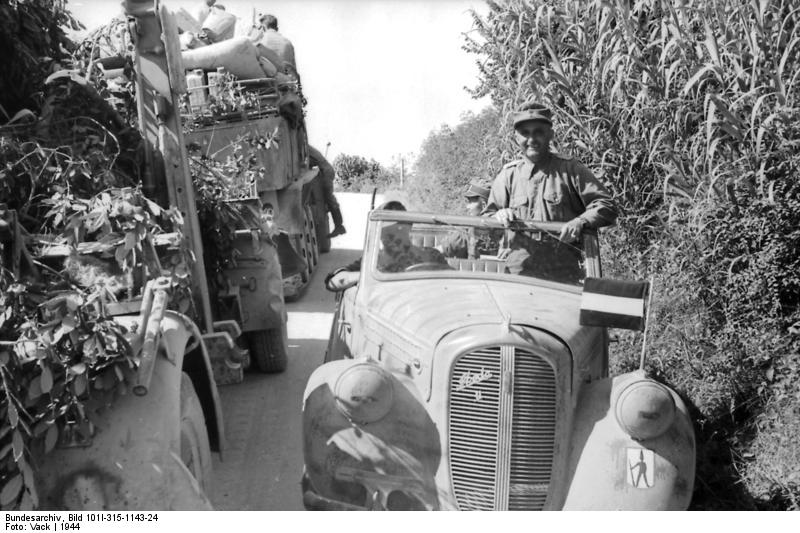
On April 16, 1944, the first Sunday after Easter, a German van was ambushed by a group of partisans in Via Cesare Battisti in Filottrano. Two of the four soldiers died, and the other two were wounded. To avenge the attack, the Germans surrounded the town and seized 16 men, who were then taken to the Carabinieri barracks and released only at midnight. The following day, the Germans carried out another roundup, sparing the hostages only thanks to the mediation of local authorities. However, the Felgendarmerie issued a manifesto declaring Filottrano a rebel town, thereby sanctioning its military occupation.

On June 30, 1944, another attack on a German truck took place. At this point, ten citizens were executed by firing squad. Meanwhile, between June 21 and 30, the Allies had fought along the Chienti river and forced the Germans onto the Albert Line, which followed the course of the Fiumicello stream to the Musone river and then to the sea. Defending this line were two divisions of German Grenadiers: the 278th, in the mountains; and the 71st, from Filottrano to the sea.

Facing them was the Polish II Corps, composed of two infantry divisions, one armored brigade, strong with at least two hundred tanks, two regiments of armored and motorized Uhlans, five artillery regiments of every caliber, and various minor units, totaling over 50,000 men. Also in the field alongside them was the CIL (Italian Liberation Corps) under General Utili: two incomplete infantry divisions, two artillery regiments, and minor service and liaison units; for a total of approximately 17,000 soldiers.

On the morning of July 1st, the Germans occupied the positions deemed essential for holding the stronghold: Villa Centofinestre, the hamlets of Montoro, San Biagio to the east, and Imbrecciata to the south. In the afternoon, the 15th Uhlan Regiment of Poznan, the vanguard of the Polish 5th Kresowa Division, crossed the river and attacked the village of S. Biagio, forcing the Germans to react; however, their counterattack on July 2nd foundered against the Allied troops. On the 3rd, the Poles managed to conquer Centofinestre, and on the 4th, Montoro. Meanwhile, the Italian Nembo paratroopers, who had pushed beyond the river to the south, were driven back by the Germans.

On the 6th, the battle concentrated in the town itself, fought primarily by German Grenadiers and Italian Paratroopers. On the 8th, the Italian paratroopers, protected by artillery, engaged in the decisive battle. They were repelled in the afternoon, but during the night, the Germans, having lost Castelfidardo and Osimo, also withdrew from Filottrano. In the morning, the Nembo scouts found the town abandoned. They freed the civilians from their shelters, and these civilians raised an Italian flag on the Aqueduct Tower, which is now preserved in the Council Hall of the Town Hall.

In the ten days of battle, the Italians suffered 56 dead, 231 wounded, plus 59 missing. The Germans lost about ninety men. The Battle of Filottrano is important because it opened the road to Ancona for the Allies, a decisive strategic objective due to the port which allowed for a shortening of the supply lines for the Allied units on the Adriatic. It is also remembered as the last engagement involving the Italian Liberation Corps (Corpo Italiano di Liberazione), commanded by General Umberto Utili, before it was reorganized later that summer into Combat Groups.

Nature, Sports, and Leisure

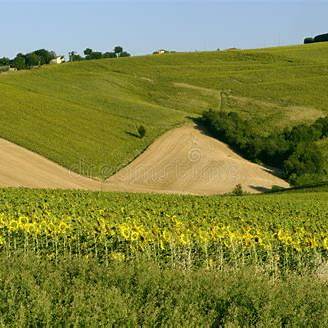
Filottrano offers visitors a unique experience where unspoiled nature blends with the area’s rich history and tradition. The gentle surrounding hills, typical of the Marche landscape, create breathtaking vistas ideal for lovers of photography and landscape painting.

For those wishing to immerse themselves in nature, the surroundings of Filottrano offer numerous hiking trails that traverse cultivated fields, woods, and valleys, allowing visitors to discover the local flora and fauna. The lightly trafficked roads and hilly routes represent a paradise for cyclists and mountain bike enthusiasts, offering challenges suitable for both beginners and experts. A place of particular interest is the Villa Spada Lavini Park, a green area that combines natural beauty with historical and architectural elements, offering an oasis of tranquility for relaxing walks. Filottrano’s strategic position also allows easy access to other natural attractions in the Marche, such as the Gola della Rossa and Frasassi Regional Natural Park, famous for its spectacular karst caves, and the Conero Riviera, with its unspoiled beaches and crystalline waters.

In Filottrano, sport becomes an opportunity to experience the town in a dynamic and engaging way. Whether cycling through the hills, walking naturalistic trails, or participating in sports activities, every experience allows for an authentic and active exploration of the territory.

Filottrano offers various leisure opportunities for residents and visitors.

“LaFabbrica” Toy Library: A well-equipped space offering a wide range of free recreational and play activities for children, promoting social inclusion and creative development.

Cultural Events: Filottrano is known for its traditions and hosts events such as the “Contesa dello Stivale” (Contest of the Boot) and the Baroque music festival “Sulle orme del Cusanino” (In the Footsteps of Cusanino), which offer moments of leisure and cultural enrichment.

These activities and locations contribute to making Filottrano an interesting destination for those seeking leisure and entertainment in a context rich in history and culture.

Touring Club Italia Red Guide

According to tradition, it was founded by the sons of the Lombard Ottrano. In the eleventh century, it was destroyed by the Marquis Marcovaldo of Ancona, and its citizens were forced to emigrate to Osimo. During the struggles between the Guelphs and Ghibellines, it sided with the former.

In 1353, it was plundered by a mercenary company; in 1393, it placed itself under the protection of Pandolfo Malatesta, and for this very reason, it was besieged in 1416 by Brancaccio da Montone, but succeeded in achieving peace after a year of strong resistance. Subsequently, it had to sustain a long struggle against Cingoli over border issues, which concluded thanks in part to the efforts of the cardinal legate Astorgio.

In the same period of the fifteenth century, it was taken and occupied by Francesco Sforza, and in 1443 by the troops of Alfonso of Aragon led by Piccinino. Shortly after, Sigismondo Malatesta took possession of it, from whom Francesco Sforza wrested it solely through famine and lack of water.

In 1815, during Murat’s campaign in central Italy, a fierce clash occurred there between the columns of the Austrian General Neipperg and the Italian Caraffa brigade which, violently attacked, resisted heroically and forced the adversary, after inflicting heavy losses, to retreat to Cingoli.

During the 1940-45 war, between June 29 and July 7, 1943, it was wrested from the Germans with bloody bayonet attacks by the Nembo paratroopers.

PR MARCHE FESR 2021/2027
ASSE 1 - OS 1.2 - AZIONE 1.2.2 - Intervento 1.2.2.2
Titolo progetto: Filottrano Città dell’Eleganza CUP: G21F24000590002 CIG: B49DF96741