Culture
25 results found
Destinations (15)
Establishments (0)
Events (0)
Itineraries (1)
Stages (3)
Magazines (6)
Typical products (0)
Experiences (0)
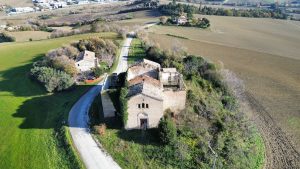
Abbey of Santa Maria di Storaco
The Abbey of Santa Maria di Storaco stood on a hill northwest of Filottrano, near the neighboring Storaco castle. It was erected in the 11th century but was destroyed along with the castle around the turn of the 12th and 13th centuries. In its place, a semi-circular masonry edicola (shrine) dedicated to the Virgin Mary […]
VIA Storaco nc
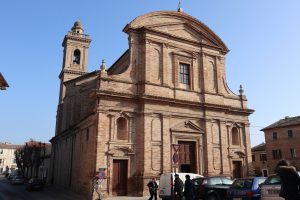
Church (Collegiate) of Santa Maria Assunta
The church has a single nave that widens at the center into an elliptical space covered by a dome, while the remaining parts are covered by a lunetted barrel vault. The transept is subtly hinted at by two side chapels, and eleven large windows illuminate the entire interior. The altar is raised three steps above […]
PLE 11 Febbraio 13
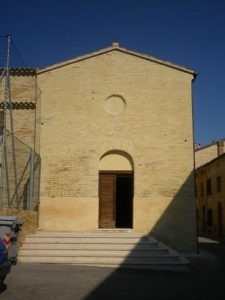
Church of San Cristoforo
The church has a rectangular plan, with a single nave covered by wooden trusses and terracotta tiles, except for the area above the altar, which features a cross vault separated from the rest of the church by a round arch. The presbytery is also raised by one step and delimited by a balustrade. Many frescoes […]
VIA San Cristofaro 19
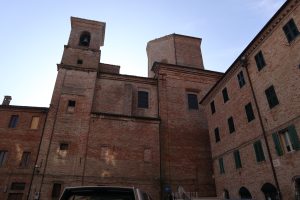
Church of San Francesco
In this location, the Conventual Friars settled in the 14th century and erected a first church dedicated to San Rocco. The 15th-century portal of this building is still preserved on the façade, enriched by the coats of arms of the commissioning noble families. In 1531, the construction of the current church, dedicated to San Francesco, […]
VIA Giacomo Leopardi 15
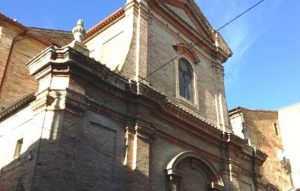
Church of Santa Maria degli Angeli
The Church of Santa Maria degli Angeli in Filottrano, in the Marche region, is a religious building of historical and artistic interest. Here is some useful information: Location: It is located just outside the historical center, in a quiet area surrounded by greenery. Historical Notes The church dates back to the 16th century, although it […]
VLO C. Beltrami 2
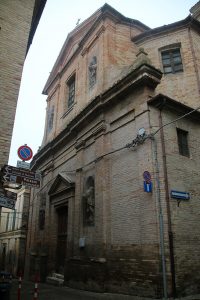
Church of St. Michael the Archangel
The church has a central plan and is richly decorated inside. There are three altars: the main one is made of scagliola (faux marble), a work by Giuseppe Mazzanti, surmounted by a frame that once housed a copy of Guido Reni’s painting of the Archangel; this frame is flanked by pilasters supporting a pediment on […]
VLO C. Beltrami 2
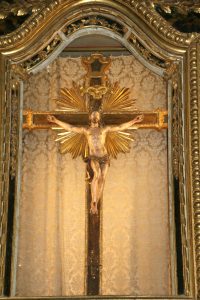
Church of the Sacred Stigmata
The church has a rectangular plan and is articulated across three levels: the first is the entrance level, connected by a staircase to the assembly hall level, which is separated by a large round arch and a further staircase from the presbytery floor, which is the highest. The hall is covered with a barrel vault […]
VIA Giacomo Leopardi 4
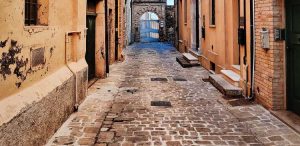
Corso del Popolo – Largo Matteotti
Walking along Corso del Popolo means immersing oneself in the authentic heart of Filottrano, among historic buildings, shop windows, the scent of coffee, and architectural glimpses that tell centuries of city life. This is where the everyday life of the town is concentrated: a place of meeting, exchange, and social interaction. Crossing the main street, […]
CSO del Popolo -
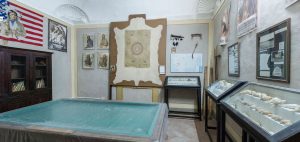
Costantino Beltrami Museum
The Giacomo Costantino Beltrami collection is located on the first floor of the Beltrami-Luchetti Palace, where visitors can admire objects and artifacts from the peoples of North and Central America. The items were collected by Beltrami during his travels across the American continent, which led him to discover the sources of the Mississippi River. In […]
VLO BELTRAMI 2
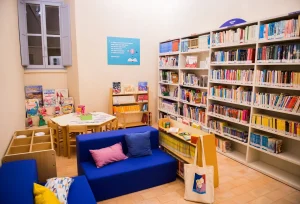
Emidio Bianchi Library
The history of the Municipal Library of Filottrano dates back to 1979, when the administration led by Mayor Isidoro Carancini approved the first regulation that formally established it. However, 1987 is considered the true founding year: under Mayor Dario Pasquini, the library began to take shape as an actual public service, with the appointment of […]
VIA Giacomo Leopardi 12
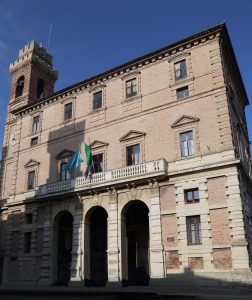
Municipal Building
The communal statutes date back to 1530, and from that time, the Town Hall (Palazzo del Comune) was erected in the Renaissance-Bramante style. It is flanked by its beautiful, crenellated civic tower, which features a clock. Inside, a grand staircase leads to the first floor where the Council Hall (Sala del Consiglio) is located—a large […]
VIA Roma 6
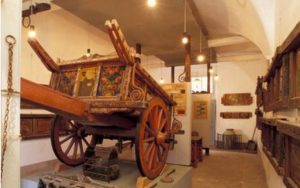
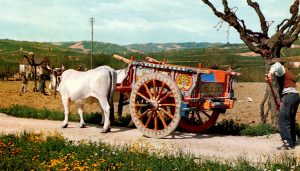
Museum of the Marche Biroccio
The Headquarters and the Collections The museum, established in 1967 and housed on the ground floor of an ancient building in the historic center (Palazzo Spada-Lavinj, now Beltrami-Luchetti), stands out for the particular choice of material collected: the Marche biroccio (agricultural cart). Born as a simple agricultural cart, the biroccio subsequently assumed various functions within […]
VLO BELTRAMI 2
1
2
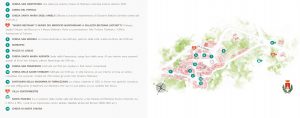
Beltrami/Biroccio Museum – Church of San Francesco
Begin your itinerary at the elegance of Palazzo Beltrami Lucchetti, and head towards the first stop: the Church of San Michele. This place of worship, dedicated to the patron saint of Filottrano, was magnificently rebuilt at the end of the 18th century, showcasing a solemn neoclassical style. Its façade is imposing, but inside you will […]
VIA Giacomo Leopardi 15
Church of San Francesco – Church/Monastery of Santa Chiara
Your exploration continues from the Church of San Francesco, heading toward the devotional and historical heart of the town. The first stop is the Church of the Holy Stigmata on Via Umberto I, a remarkable example of 18th-century Baroque style. The true focus of this place, however, lies inside: a miraculous 18th-century crucifix, famous in […]
VLO delle Monache 1
San Cristoforo – Beltrami/Biroccio Museum
The Church of San Cristoforo is a true witness to the history of Filottrano and is counted among the oldest churches in the city, with origins dating back to around the year 1000. The building features a deliberately simple structure, characterized by a single nave that highlights its essential nature. However, its greatest value lies […]
VLO BELTRAMI 2
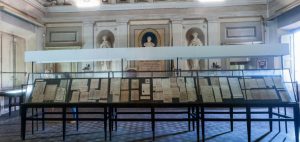
A Project for the Museum of the Mississippi Explorer
A Project for the Museum of the Mississippi Explorer The museum houses artifacts from the populations of North and Central America collected during the voyages that Giacomo Costantino Beltrami undertook on the American continent, which led him to discover the sources of the Mississippi in 1823. On August 31st of that year, he reached the […]
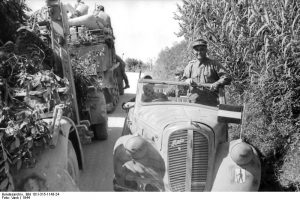
Battle of Filottrano
Ecco la traduzione in inglese del resoconto della Battaglia di Filottrano: On April 16, 1944, the first Sunday after Easter, a German van was ambushed by a group of partisans in Via Cesare Battisti in Filottrano. Two of the four soldiers died, and the other two were wounded. To avenge the attack, the Germans surrounded […]
DOCUMENTS and SOURCES that talk about FILOTTRANO
Persée: This website describes the locality of Santa Paolina in Filottrano, known for its Gallic Senones archaeological finds. A Gallic necropolis with an important burial ground is mentioned. Altra Linea Edizioni: This source discusses the historical residences of Filottrano, emphasizing the importance of noble families such as the Perozzi, the Palmucci, and the Spallicci. The […]
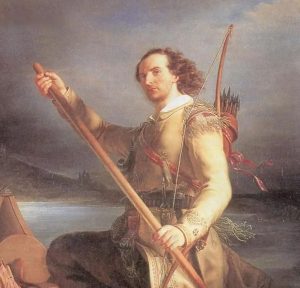
Giacomo Costantino Beltrami
He was one of the seventeen children of a customs official of the Venetian Republic and was born in Bergamo in 1779. His father intended for him to pursue legal studies for a secure and stable career as a functionary, like himself, but the young Giacomo quickly displayed his intolerance for that old and tedious […]

The ‘Dakota Sioux’ exhibition in homage to Giacomo Costantini Beltrami was inaugurated in Filottrano
The exhibition, held at Palazzo Accorretti in Filottrano from November 11, 2023, to January 28, 2024, celebrated Beltrami’s connection with the indigenous peoples of America, particularly the Dakota and Sioux tribes, with whom he established a relationship of deep friendship. Homage to the Explorer: The exhibition took place during the bicentenary of Beltrami’s journey that […]

Touring Club Italia Red Guide
According to tradition, it was founded by the sons of the Lombard Ottrano. In the eleventh century, it was destroyed by the Marquis Marcovaldo of Ancona, and its citizens were forced to emigrate to Osimo. During the struggles between the Guelphs and Ghibellines, it sided with the former. In 1353, it was plundered by a […]